Category Archives: Conservation

Ten Year Plan to Reafforest Kyoto’s Mount Ogura Goes Ahead

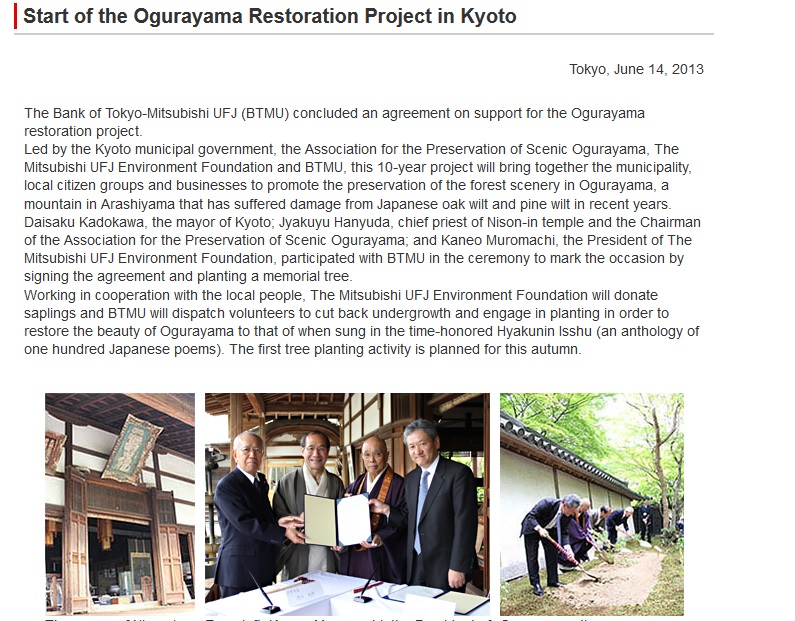
Good news today! The Bank of Tokyo-Mitsubishi UFJ (BTMU) has thrown its weight behind a plan to restore the natural beauty of Kyoto’s Ogurayama. The ten-year reafforestation project aims to undo the damage wrought by human neglect and the recent of blight of diseases that are killing off much of the native oaks and pines. Mount Ogura has been famed since Heian times as the “Poets Mount” and is celebrated in the tanka anthology Ogura Hyakunin Isshu (100 poems by 100 poets). It’s nice to know that volunteer groups such as People Together for Mount Ogura (PTO) are no longer fighting these problems on their own.

Full article on the BTMU site here: Start of the Ogurayama Restoration Project in Kyoto
Get involved with PTO’s conservation activities here: Let’s begin with what we can do!

PEOPLE TOGETHER FOR MT. OGURA WORKDAY SCHEDULE 2012

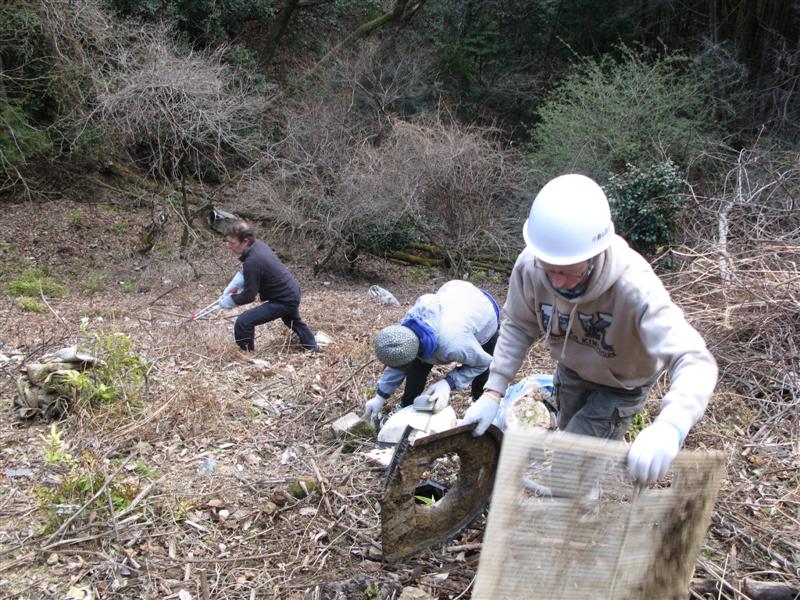
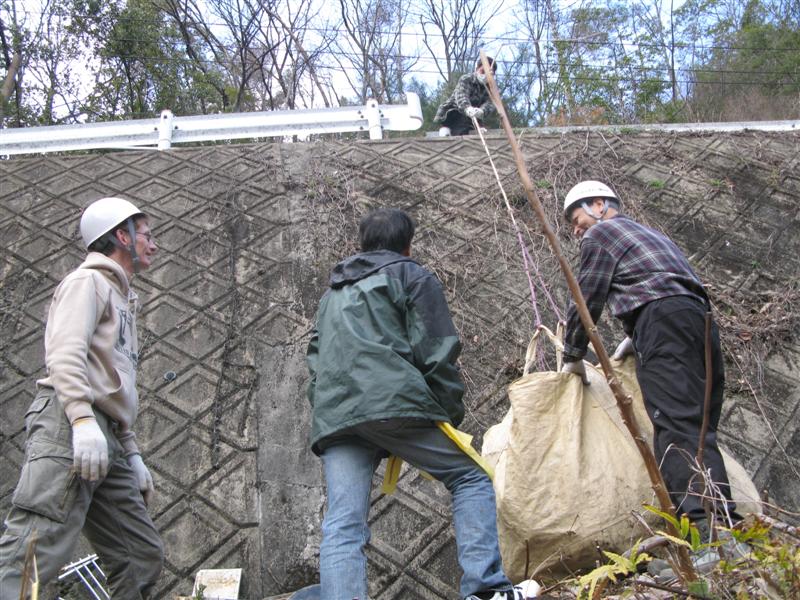
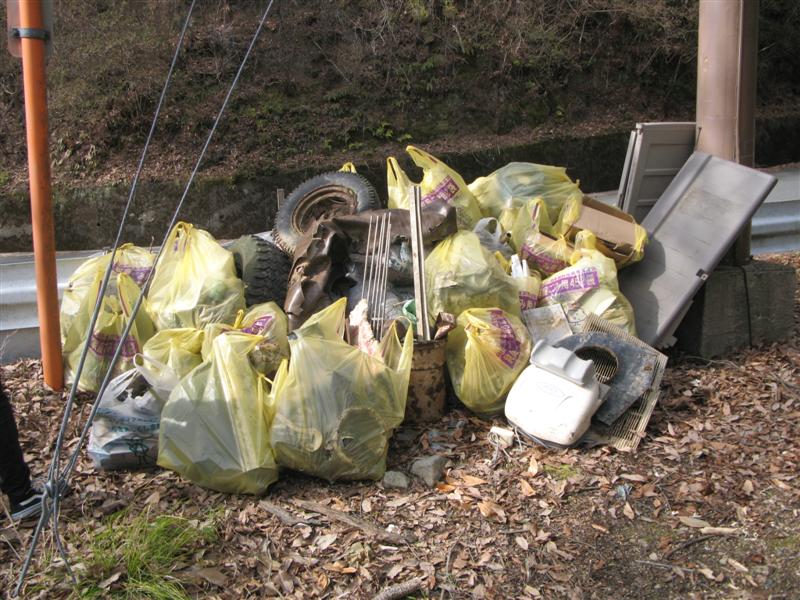
Last weekend I joined PTO for their first rubbish clearance of 2012. The weather was changeable to say the least and I got well dirty, but the results did us proud.

We had a good turn out on this occasion with people from China, Indonesia, Canada, New Zealand, a fair few Brits and the local J-crew. I was also pleasantly surprised to see both Mike Chan and Masyhur Hilmy (who were up in Tohoku with me) joining in too. Anyway, there is always room for more volunteers! If you are interested in poetry or conservation, come and join us next time on the Poet’s Mount!

The meeting place is normally Saga/Arashiyama Station at 9.45 am. You should bring your lunch and something to drink, and you should probably also contact organiser Stephen Gill in advance to let him know you are coming: heelstone@gmail.com

Here’s the schedule for the rest of this year. This may be augmented with other events or adapted slightly as the year proceeds. Check the new PTO website for updates.

Apr. 7 (Sat.) Footpath maintenance
15 (Sun.) Brushwood preparation “
21 (Sat.) Footpath maintenance

May 5 (Sat.) Deer-fence repairs
19 (Sat.) Deer-fence repairs
27 (Sun.) Rubbish clearance *

June 3 (Sun.) Brushwood preparation “
16 (Sat.) Brushwood preparation “ (reserve)

Jul. 1 (Sun.) Fieldwork
14 (Sat.) Discussion meet “ (dinner afterwards)

Aug. (Management Committee meeting)

Sep. 2 (Sun.) Bamboo fence repairs “
9 (Sun.) Bamboo fence repairs “ (reserve)
16 (Sun.) Bamboo grove maintenance “
22 (Sat.) Bamboo grove maintenance “ (reserve)

Oct. 6 (Sat.) Pine forest maintenance
14 (Sun.) Rubbish clearance *
20 (Sat.) Footpath maintenance
27 (Sat.) Autumn Festival event (if wet, moves to 28)

Nov. 3 (Sat.) Pine forest maintenance
17 (Sat.) Pine forest maintenance
25 (Sun.) Rubbish clearance *

Dec. 1 (Sat.) Pine forest maintenance
15 (Sat.) Pine forest maintenance

Dec. or Jan. (Management Committee meeting)

* goes ahead except in heavy rain; all other workdays may be postponed or cancelled in the event of rain: if in doubt, best check with organizers on the day!
“ does not require any hiking

Of related interest:
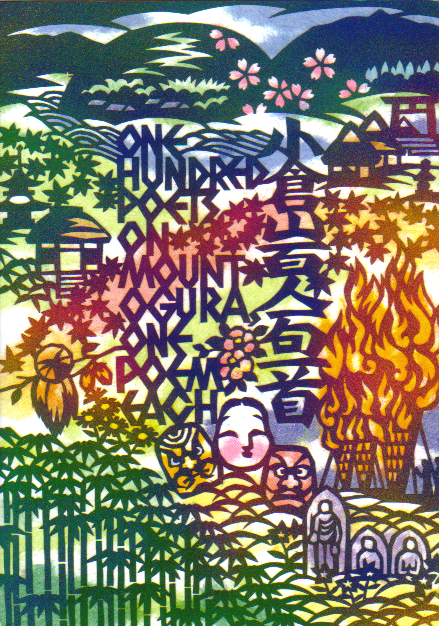
One Hundred Poets on Mount Ogura, One Poem Each
People Together for Mt. Ogura – The Poets’ Mountain

Pine felling on Mount Ogura

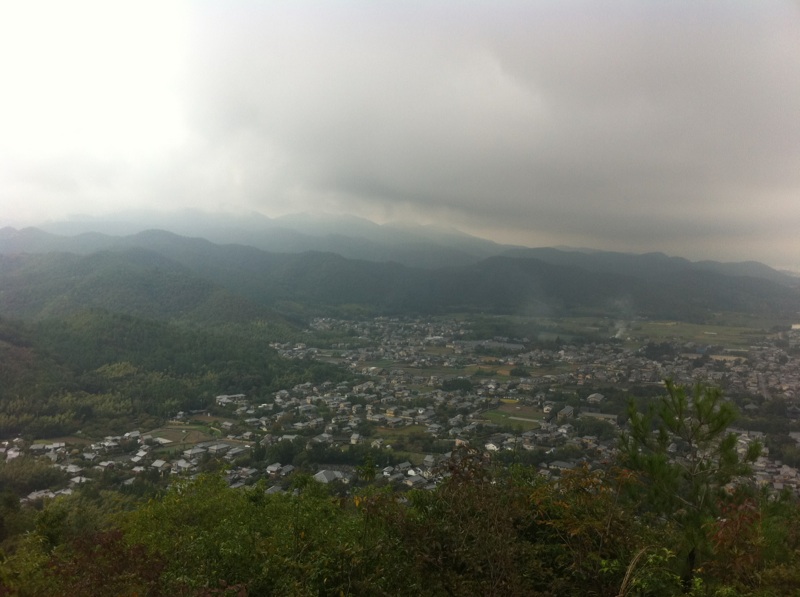
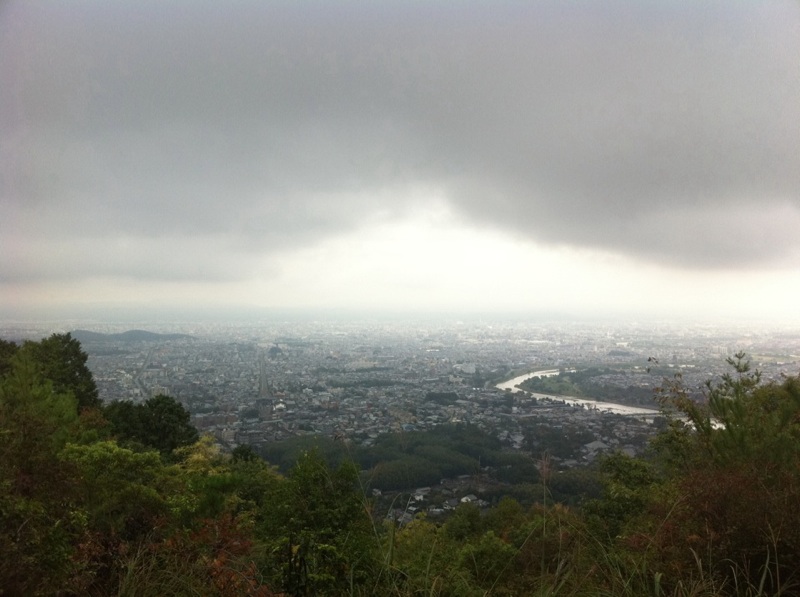
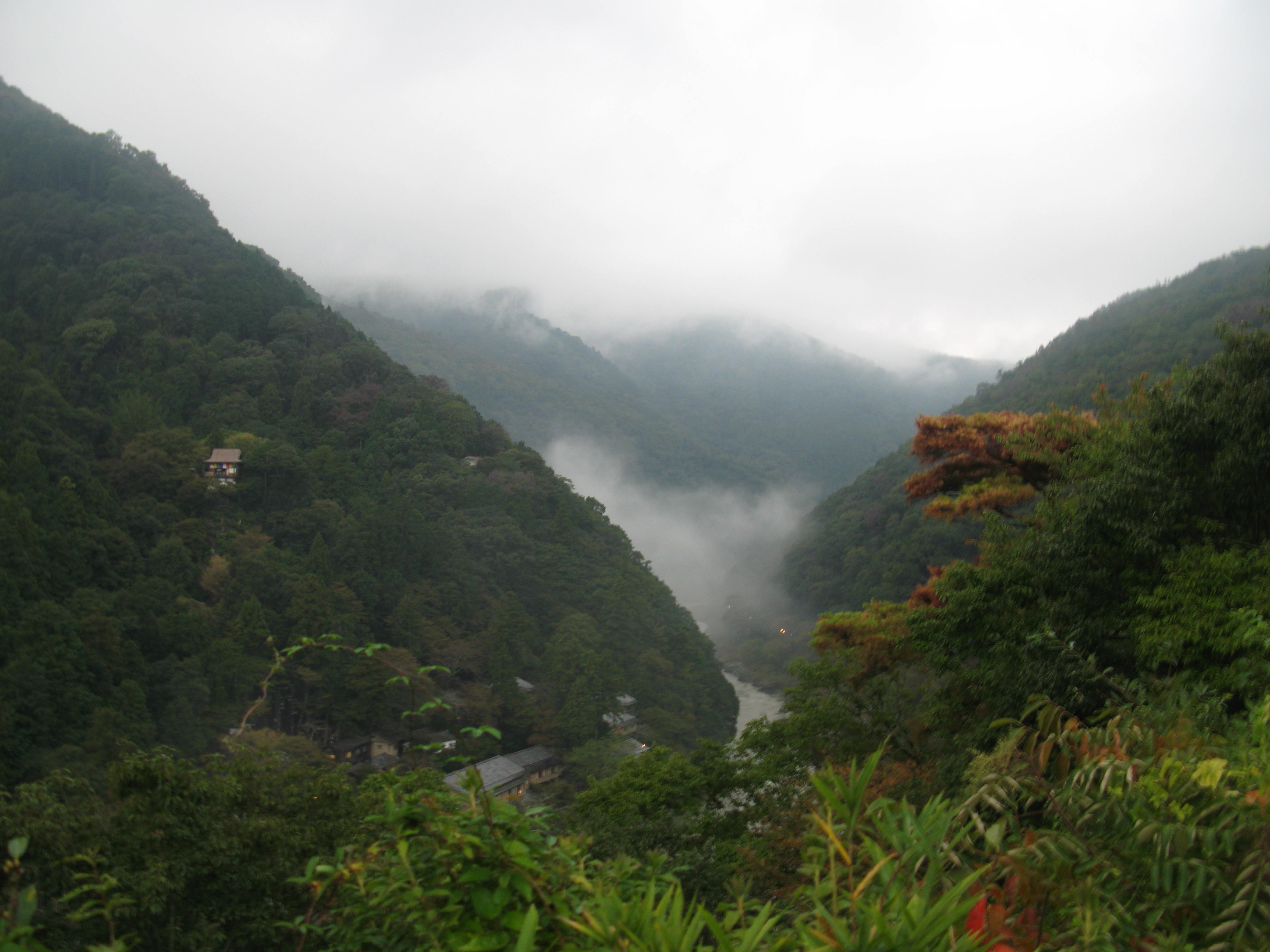
Once again last Saturday I joined P.T.O. (People Together for Mt. Ogura) for another day of pine cutting on the summit of Mount Ogura. Above you can see a misty view of the Hozu river gorge.  To the right of the view in the foreground is a pine tree that is completely brown. It has unfortunately succumbed to the pine disease that is killing so many trees not only on Mount Ogura but throughout Japan. This is why we are cutting down the pine trees that have died – to stop the disease from spreading. Below is another view of the Hozu river. In a week or two when the maples have turned, this view will be spectacular. Many people will be taking the Torokko train through the valley and the Hozu-kudari boat trip back to Arashiyama to enjoy the wonderful autumn scene… little knowing a large part of the oaks and pines in the Saga/Arashiyama are threatened by separate diseases… Continue reading

October on Mount Ogura

On Saturday my colleague Chris Carver and I joined PTO for another day of conservation work on Mount Ogura. After a solid day of rain the day before I had fully expected  Saturday’s work to be cancelled, but the rain held off in the morning and the planned day of work went ahead. It was very humid up on those forested slopes, but we were fortunate with the weather as the next solid downpour didn’t occur until the evening – after our descent. The views over Kyoto from Mount Ogura are always spectacular, but Saturday morning they were rendered strange and mysterious by the mists and cloud.

On reaching the summit, we spent the day pine felling. There is a pine disease decimating the pine forests on the mountain. By removing the trees that have already died and burning them, the hope is that the disease will be prevented from spreading further. I first participated in this work a year ago, since when many more trees have died. It does seem like an endless task at times. At one point though, chopping up a tree by myself, I looked up the slope and saw a large stag and one or two doe flashing through the trees. A magical moment! I’d seen plenty of their droppings before but never caught a glimpse of them on the mountain.

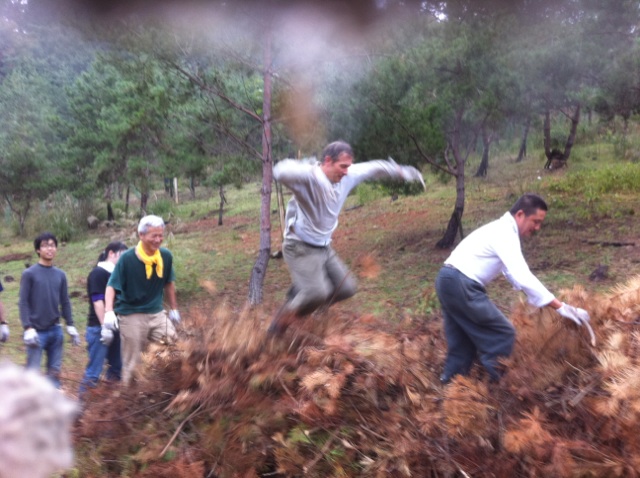
Cutting down the pines with hand saws, and carrying the wood to the sorting area  is all good exercise and after the branches have been chopped and put into manageable piles there was a bit of fun in what Stephen Gill refers to as the Ogura Olympics – jumping up and down on the piles of smaller branches to flatten them down.

Really very springy indeed!

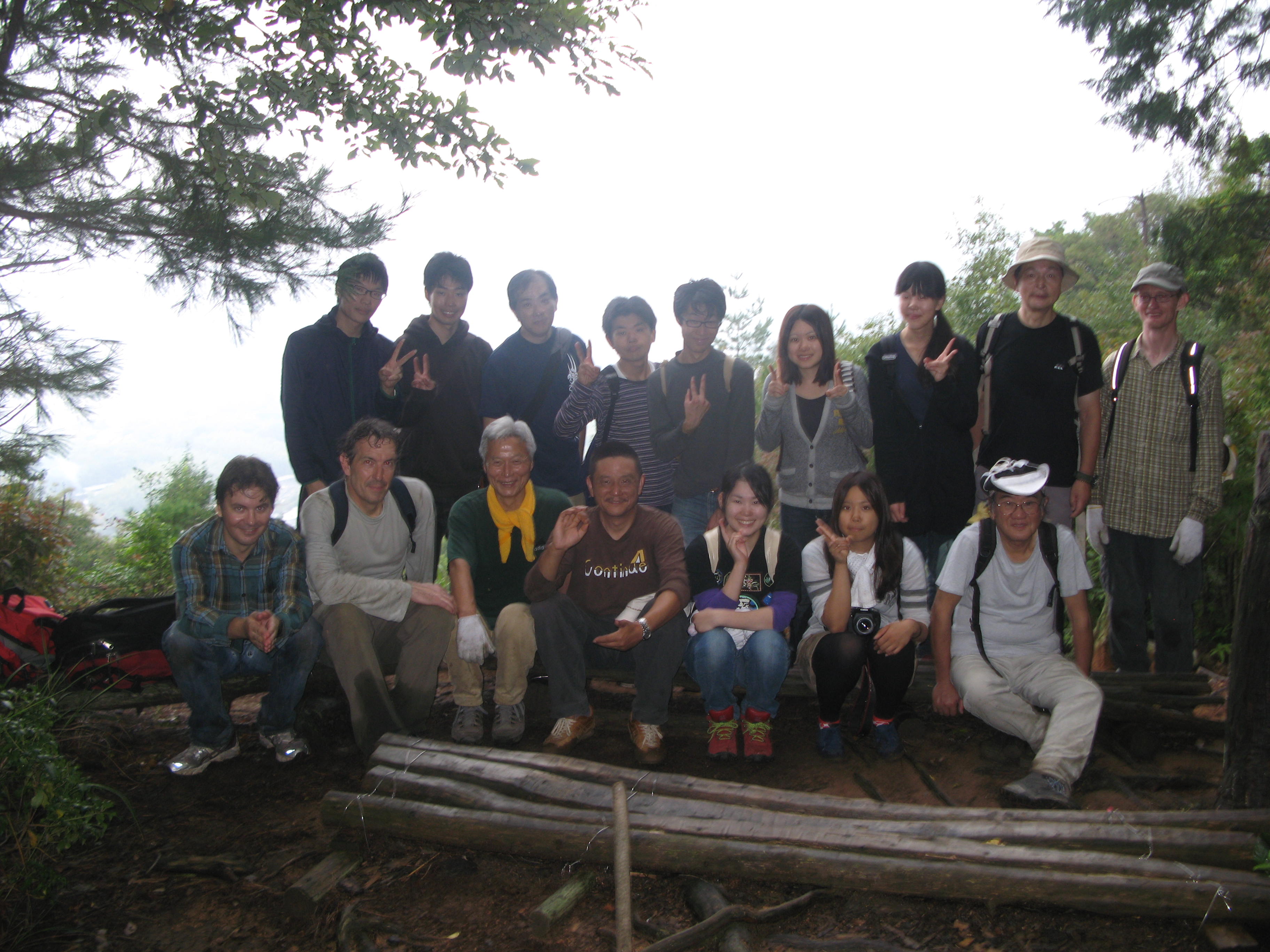
The fuzz around the edges of the pictures is from the mist adhering to the lense. The lenses of Chris’s glasses kept misting up too! It was so humid! Here we all are half way down the mountain after a solid day’s work.

And here is a view down the Hozu river valley on our return journey. Here from somewhere down in the valley we heard the long, high call of a stag calling for its mate – a typical autumn sound and a motif in much Japanese poetry.

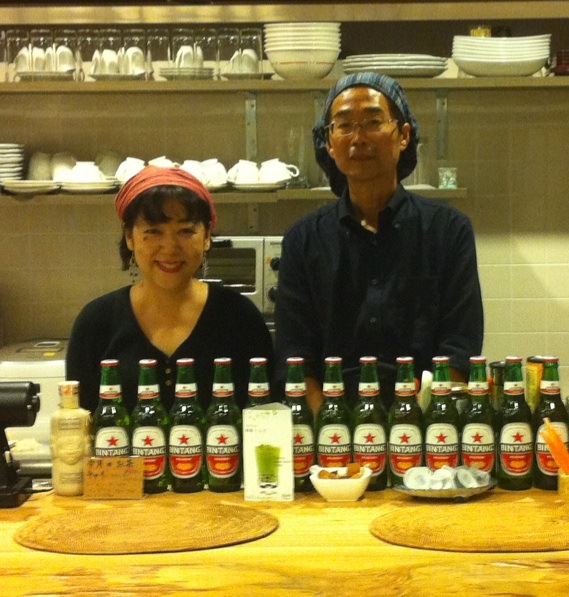
After we had parted company with the bulk of the group, Stephen, Chris and I popped into a Balinese cafe/eatery named Koiuta Salon for a quick drink before going home. The people there were very friendly and I’m told they do a very nice green curry, and nasi goreng. We settled for a bottle of Bintang each. After a hard day of hiking and chopping down trees, I have to say those Bintangs tasted superb! Here are the owners and their beautiful Bintangs!

If you fancy a spot of Balinese food, or Balinese coffee or just a Bintang beer, the Koiuta Salon is opposite Saga Elementary School on the corner of Marutamachi Street and Prefectural Route 29 (府道29号線).

The next day of pine felling is on November 5th. Why not join us? To find out more about the conservation activities of PTO (People Together for Mt. Ogura) you can check this article or go direct to their homepage. There is also a very nice bilingual book of haiku and tanka available the proceeds of which all go to supporting PTO’s work on the mountain and you can read about that here: One Hundred Poets on Mount Ogura, One Poem Each.

Hiking Along the Old Hozu River Towpath

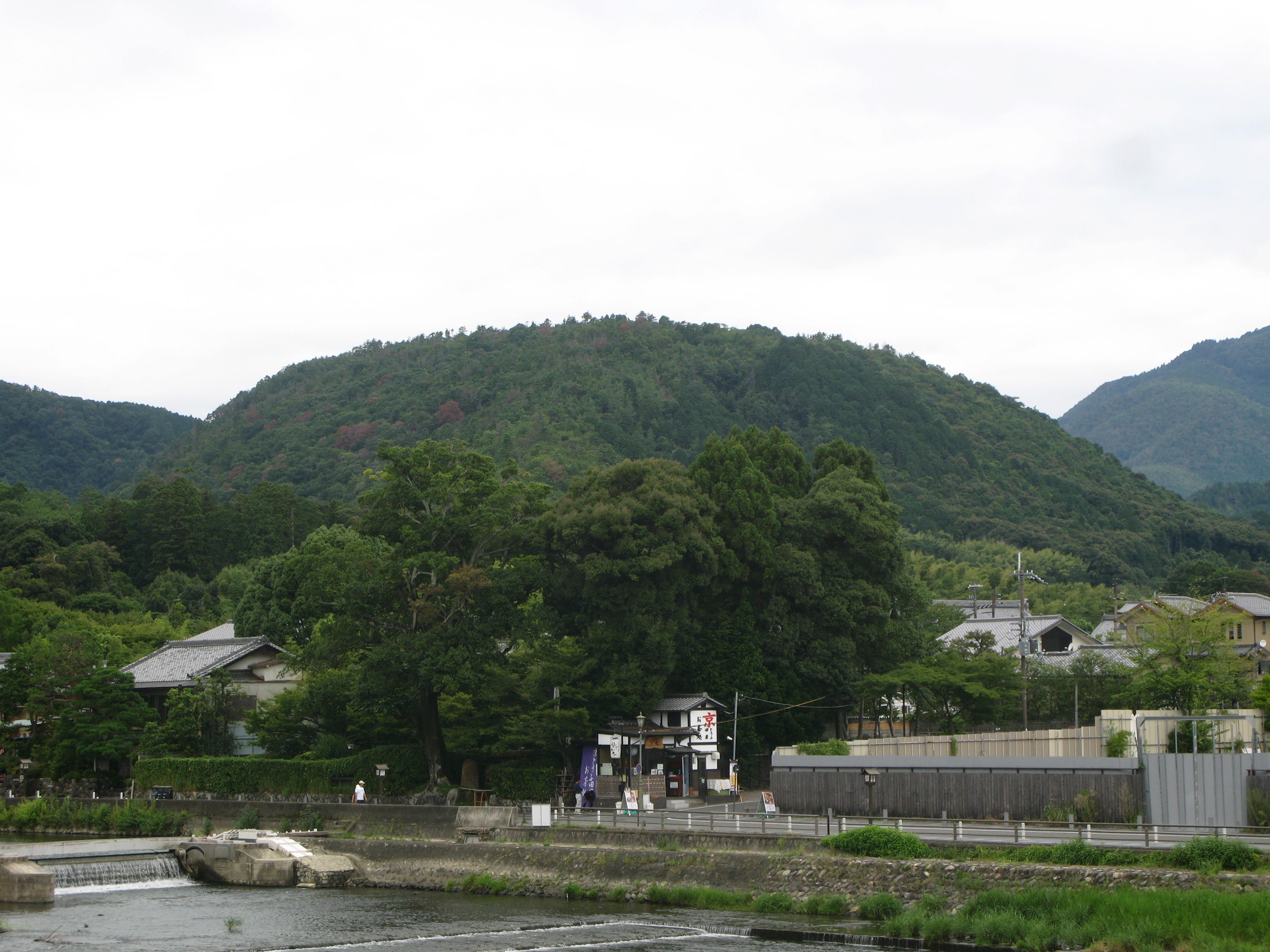
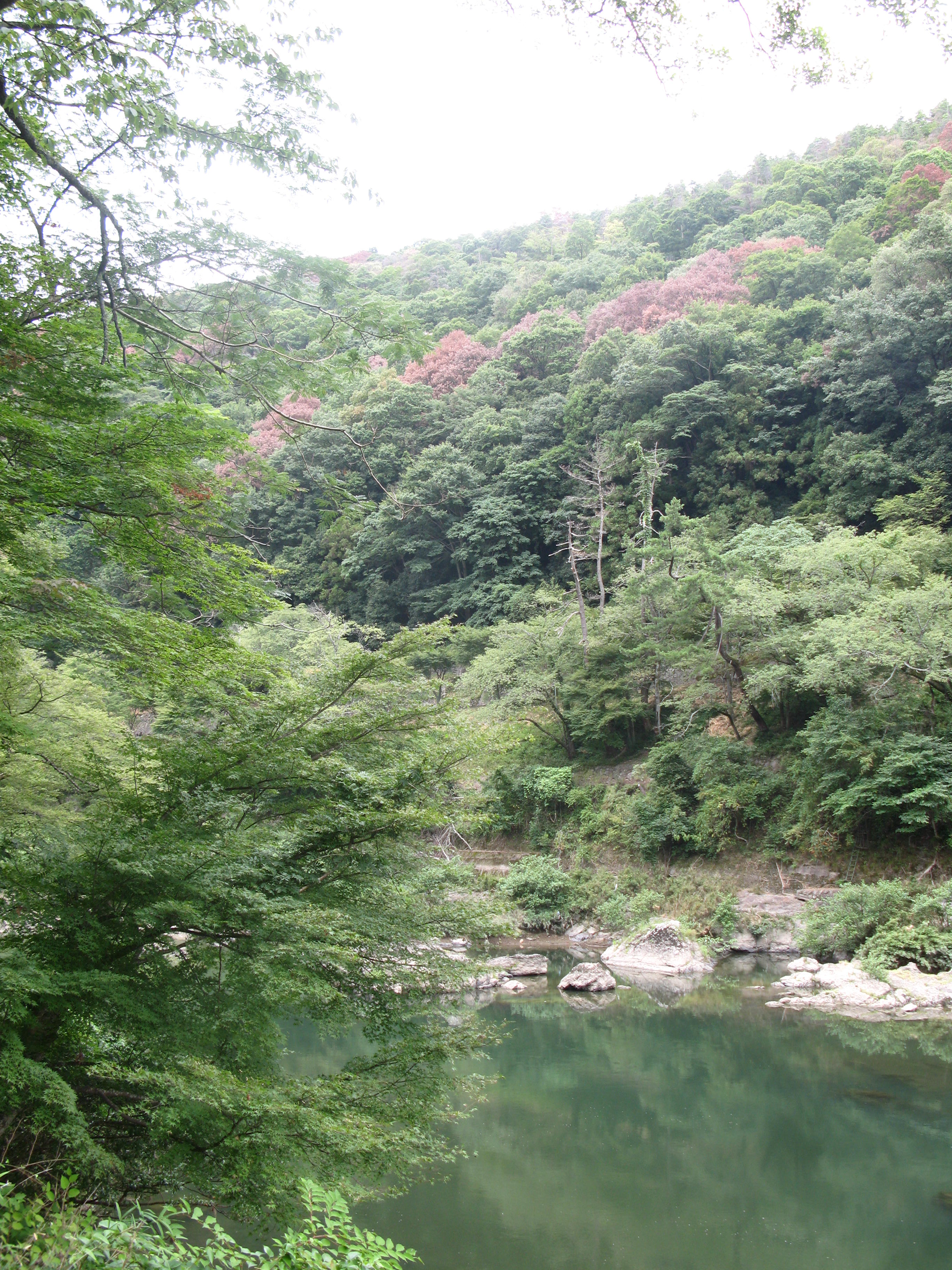
Last Saturday I joined Stephen Gill and Okiharu Maeda of the conservation group P.T.O. for a hike along the Hozu River. The hike wasn’t purely for the pleasure of getting out into the fresh country air though, Maeda-san and Mr. Gill were making a detailed report, with photographs of the exact location of trees on Mount Ogura that have been affected by a deadly oak disease. Even from a distance now you can see some patches of brown on the mountain (left click on these pictures twice to see them at their maximum size).

These trees are not exhibiting early autumn foliage – they are dead, and the process is quick. Stephen told me that most of these trees looked fine three weeks ago. As we moved closer to the mountain along the river, the full extent of the problem became clearer.

I think during our hike Maeda-san must have counted over 100 dead trees on the mountain. P.T.O. will submit their report to the city office and ask them to act upon it. There are methods to tackle this disease but as you can see from the damage that has already been wrought, these methods need to be implemented fast before this beautiful mountain view is ruined.

Our route took us along parallel to the old Funahiki trail that horses once walked when pulling boats back up to Kameoka. That path hasn’t been maintained at all and in places barely exists anymore so the going was a little hairy at times. Our first barrier however was this: Continue reading

Shijo Kyo Machiya BBQ Night II

Look at this lovely old machiya! How could you resist a barbecue here?

Shijo Kyo Machiya BBQ Night II is on Saturday, June 18th from 5pm-8pm. Here are the details:

Shijo Kyo Machiya BBQ Night II will feature a special lecture by architect Geoffrey Moussas. In 1994, he started the all-out research work of Kyo Machiya and, with his company Design 1st, has since become known for his Machiya renovation design while incorporating modern elements.

1st Part: 5PM-6PM: Lecture on Kyoto machiya by Geoffrey Moussas

2nd Part: 6PM-8PM: Dinner in the 100 year-old machiya building, garden and “Kura bar”. All of this will turn into a big party space, where business persons and students can socialize and network.

Also, this event is our “tribute” to the non-Japanese who continue to visit and live in Japan after 3.11. In short, non-Japanese will be given a
discount!!

Cost:
Non-Japanese / Students: 2,000yen
Japanese: 2,500yen
With RSVP: food + two drinks / Without RSVP: food + one drink

For reservations, please visit this facebook page,
or send an e-mail to: information@waraido.com

There are some pictures from the first Shijo Kyo Machiya BBQ Night here on facebook.

Venue: Shijo Kyo Machiya (Nishinotoin-Shijo)
〒600-8493 11 Kakkyo-Yama-Cho, Shimogyo-ku, Kyoto City
Just 5 minutes on foot from the subway Shijo Station or Hankyu Karasuma Station. Here is a map.

Easy access, plenty of food & drinks, inspiring presentations.
Don’t miss it!!

Thanks to Eric Luong for sending both the information and the pictures.


Music in a Bamboo Grove

Earlier today, I joined the conservation group P.T.O.‘s activities in Arashiyama. We spent the morning preparing bamboo switches that will be used to repair the fences along the bamboo groves this autumn. These fences are important because they keep the wild boar out and prevent them from eating up all the new bamboo shoots in the spring. After we had finished our work we were treated to an unusual performance by one of our members. Here in the bamboo forest Aki Nagane played for us the mukkuri, a traditional Ainu mouth harp made itself from bamboo. Just watch this. It’s a special moment in a special place.

Stephen Gill‘s impromptu haiku at the end of the video was later revised as follows,

むっくりや草木の言葉聞こえけり
mukkuriya/kusakinokotoba/kikoekeri

Here’s a simple translation:

Through you, oh mukkuri
I hear the language
of the grasses and trees.

Nagane-san added that as she played she was imagining both the growth of the bamboo and the water being sucked up along it’s height from the ground and right up to the top.

Related:
Clearing up the Mountain
People Together for Mt. Ogura – The Poets’ Mountain
One Hundred Poets on Mount Ogura, One Poem Each

Two Views from Yasaka Shrine…

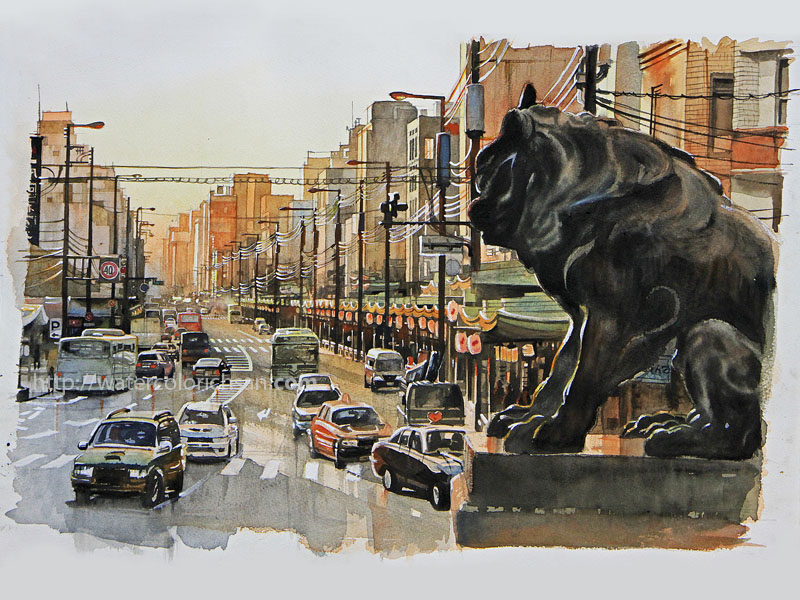
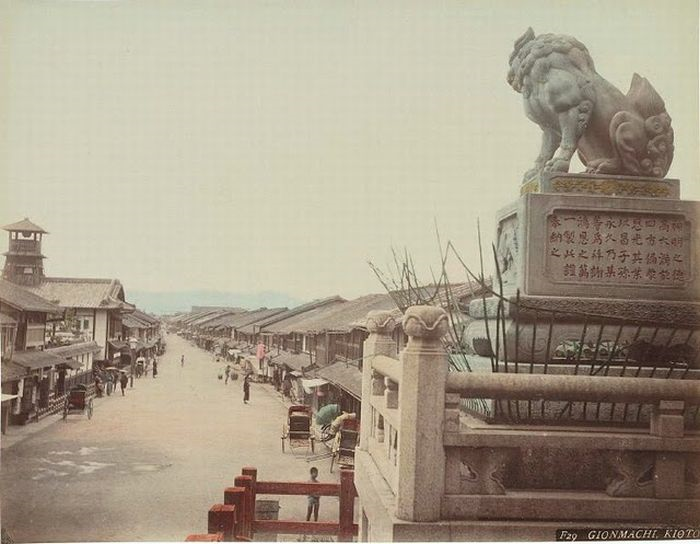
…separated by time. Both images give us a “bronze lion’s eye view” down Shijo as seen from the entrance to Yasaka Shrine. The first is a recent image painted by my hopelessly romantic friend Ichsan. Do please visit his website to see more of his wonderful paintings. This is the image of Gion with which we are familiar today.

This water colour sketch "City Guardian" is by the artist M Ichsan Harja Nugraha. Click to visit his website.

And now here is the same view, as it was over a hundred years ago:

Click to view more photographs of 19th century Japan.

Incredible how much it has changed, isn’t it? The man wasn’t kidding when he said “the past is a foreign country”. If we could transport citizens of 19th century Kyoto to the present day and show them what we’ve done to this city, how do you think they would react? Would they see progress or would they weep? In turn, what would it have been like to live in this city then? Can you imagine the sound of the streets without motorized traffic? Can you imagine being able to see the mountains all around you from the very center of the city? Can you imagine waking up in the morning, walking out onto those streets and greeting the people there? If you are familiar with 21st century Kyoto, doesn’t this picture haunt you? Only a few key buildings from that time remain today, and all the rest has changed utterly… How will this scene look in another hundred years?

The Artist Brian Williams

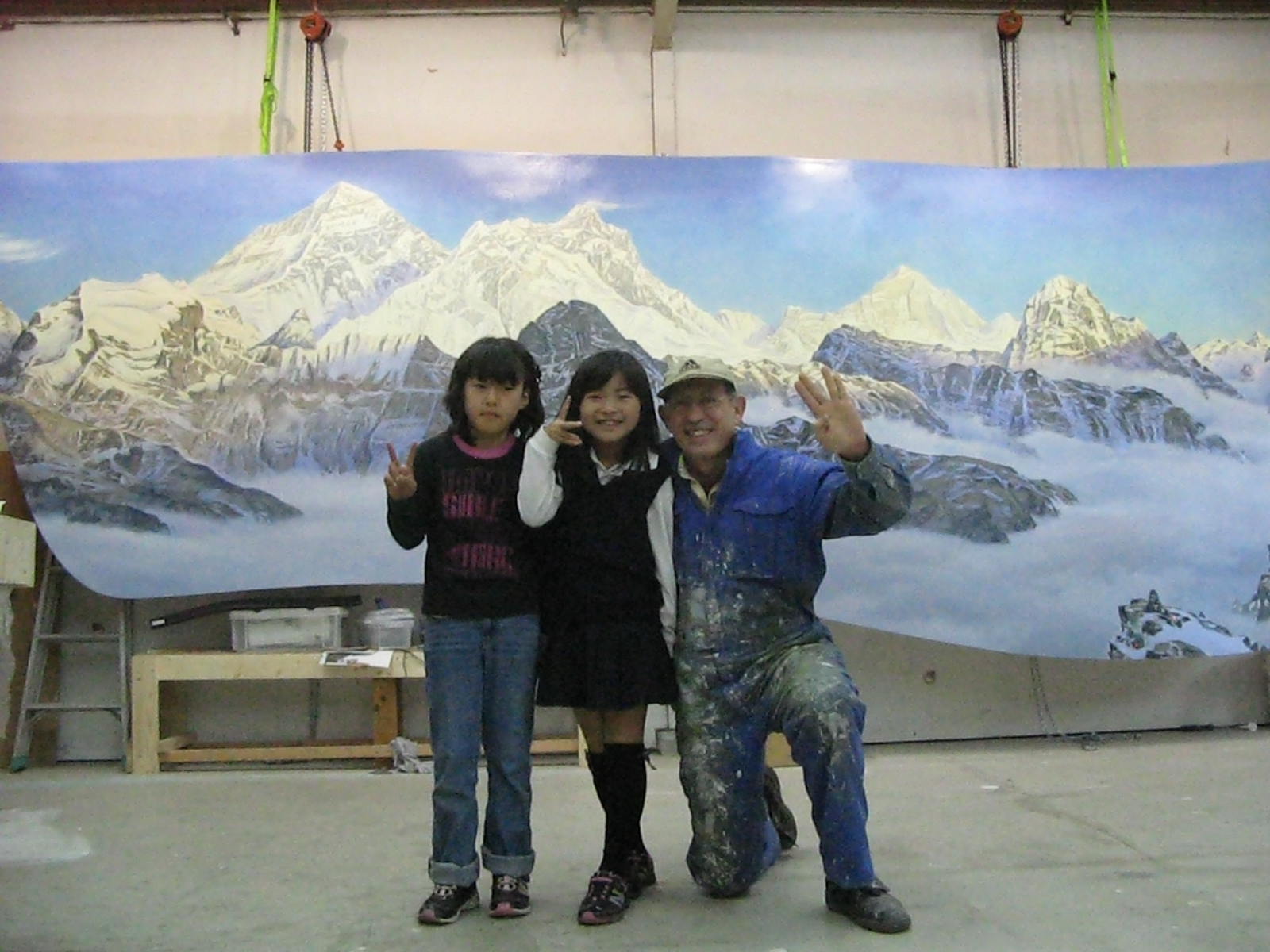
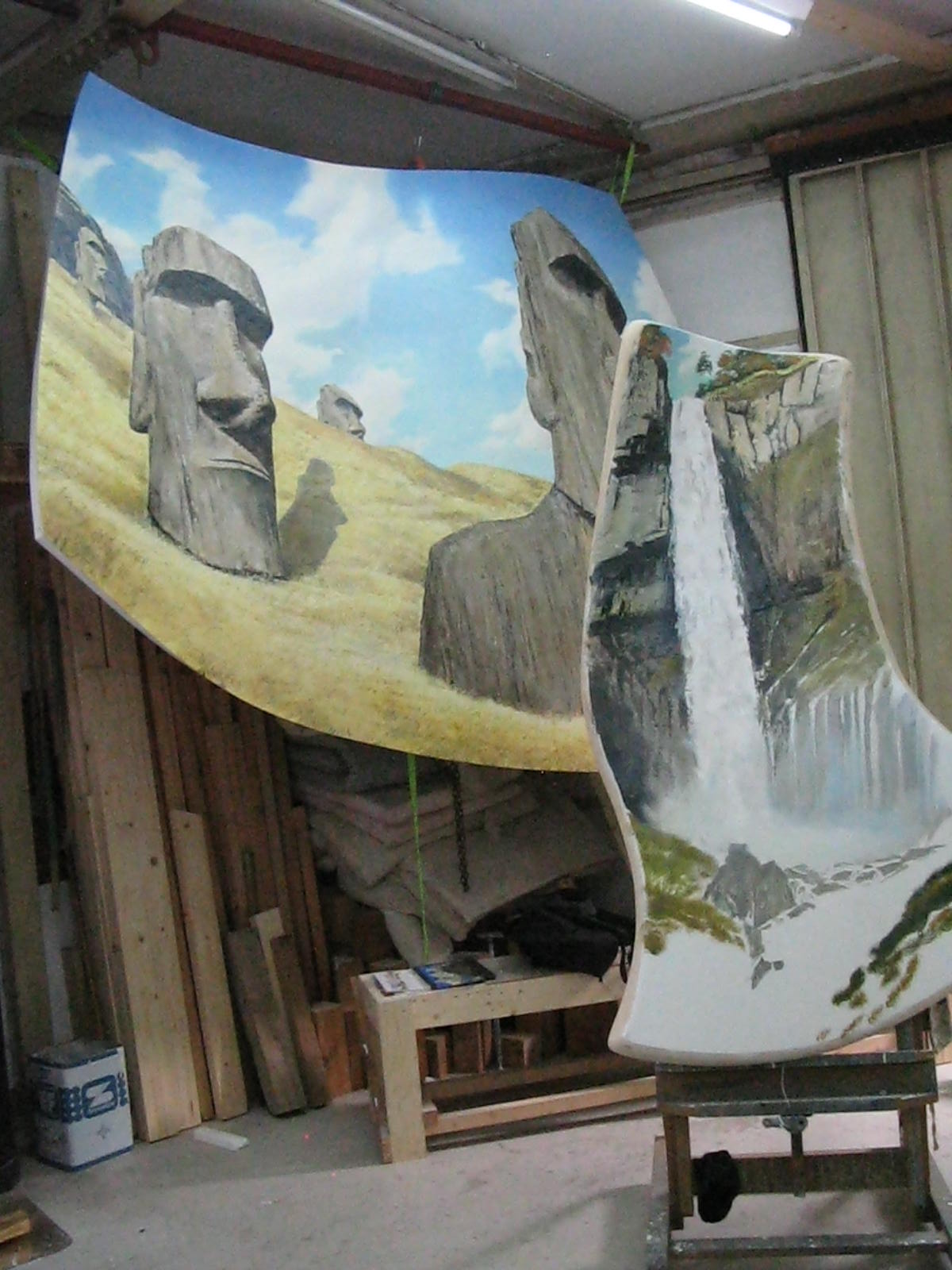
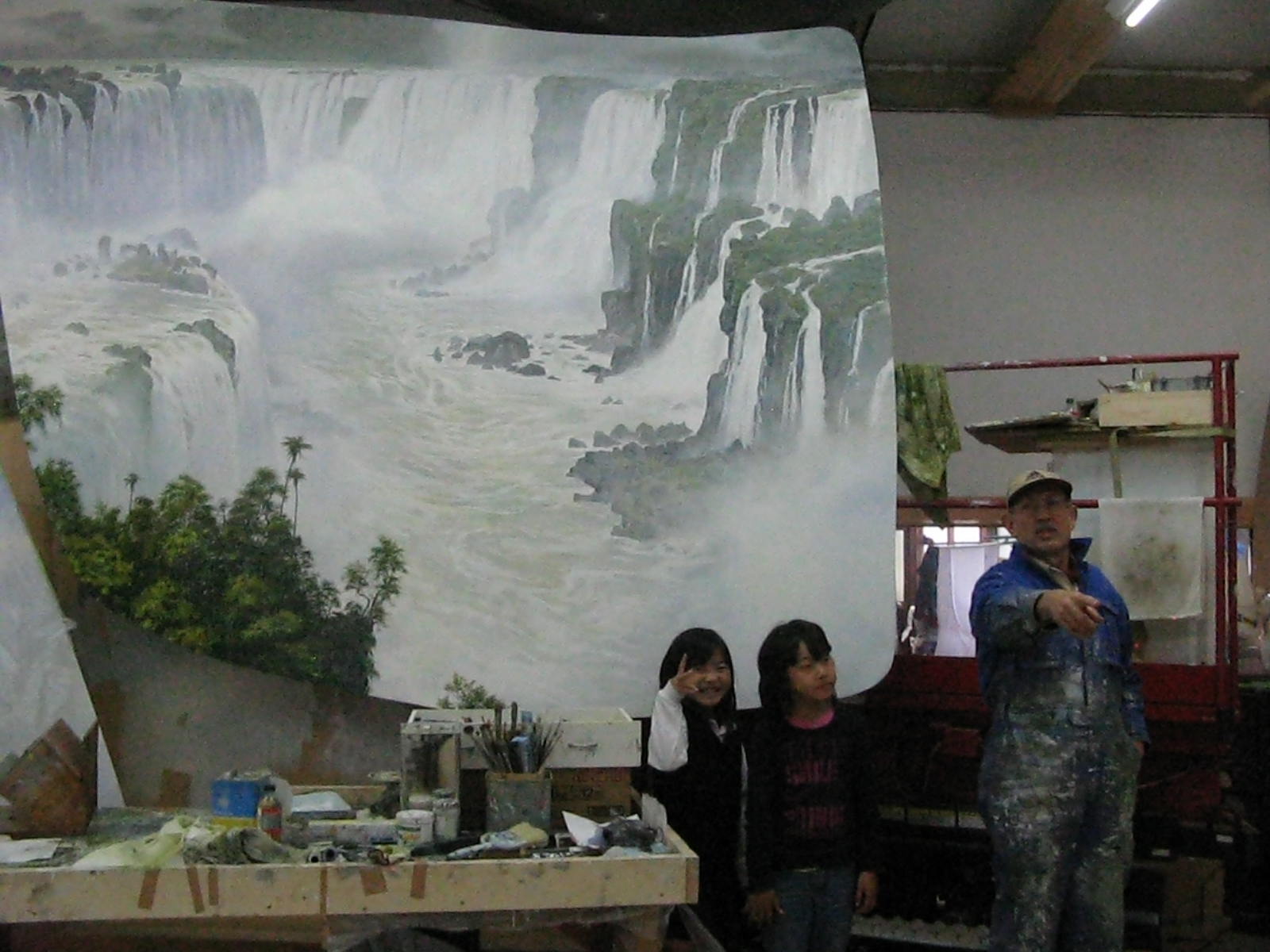
Last week I visited the artist Brian Williams at his studio, sat down for a chat and had a sneak preview of his upcoming exhibition at Kiyomizu Temple. Brian is due to have a special one night exhibit of his parabolic paintings this Saturday evening (May 14th) – the first time ever in 1200 years that any art has been exhibited on the famous Kiyomizu balcony. Brian is famous for his magnificent landscapes and many of the exhibit paintings depict Japanese scenes, such as the Kegon Falls in Tochigi or Kiyomizu Temple itself. Others are from further afield: the moai statues of Easter Island for example,  a misty isle in the Venetian lagoon, or the Iguazu Falls of South America, which as Brian tells it “make Niagra look like a trickle”. These paintings are big. They impress on you the wonder that the artist must have felt as he viewed the original scene. But of all of them, the painting that has the most impact when you enter Brian’s studio is of a soaring, white, Himalayan mountain range with Everest at its apex. Gazing up at it you can almost feel a cold blast of wind from those snowy peaks.

Brian Williams with two of his young neighbors and THAT painting.

Brian first painted Everest in 1995 when on a visit to Nepal. During a trek to the Gokyo Peak, he was, by his own admission, clowning around and jumping about with some children when he managed to rupture his knee ligament and had to be evacuated. The injury turned out to be fortuitous. Two days after, there was an avalanche that killed 24 members of his party, including his good friend the cameraman Kajiwara Tatsuo. Asked about it, Brian says that he counts himself very lucky, but you can tell that he still carries the sadness of that loss.

Easter Island and the Kegon Falls.

Like the Everest painting most of the works in the upcoming parabolic exhibition are based on works previously done on a flat surface. Brian says this reinterpretation helps him to understand what exactly makes a painting parabolic. Essentially, Brian’s parabolic paintings are painted on a curved surface of alternating concave and convex waves. “The human eye is curved,” says Brian. “These paintings follow the trajectory of the eye as it tracks a scene and takes it in. It is an attempt to recreate the sensation of viewing a landscape through the external shape and curvature of the panel.” He told me how he first came up with the idea when he was out painting a scene in rural Shiga. In 2007 he bought a bucket truck (a type of mobile aerial work platform) in order  to give himself some elevation when painting. Up high in the bucket one day, he dropped a brush, and as he lowered himself to retrieve it and simultaneously followed the brush with his eyes as it flowed downstream, his vision was caught up in the natural sweep of the landscape in a great curving arc and breadth of vision that no flat surface could depict. It was this revelation that led to his creation of this new form of parabolic representative art. “These paintings have a depth illusion that no flat painting can match, they have a breadth of field that no flat painting can match. They have a sense of presence, I think, that no flat painting can match.” Indeed standing before one of these parabolic works, the sensation is very much like standing before a portal into the original landscape, the curvature of the canvas naturally pulling your vision out of yourself, into and beyond the scene.

The Iguazu Falls

“I’ve always disliked straight lines,” says Brian, “But this idea of shaping the canvas to express the sensation of viewing a scene is completely new – and at the same time completely old.” Last June Brian visited the Altamira caves in Spain and viewing the cave paintings there, he realised that his parabolic works had ancient precedent. In the deepest recesses of the caves, prehistoric artists had used the natural curvature of the walls to give their totem animals a unique visual depth and dimension. “They come alive!” he says excitedly. This is the same sense of 臨場感 (rinjokan or being there) that Brian now strives to attain in his work.

Clearly Brian has travelled a lot in his life – and he began early. Born in 1950 to American missionary parents he was raised in Peru and Chile until his teens. His life there wasn’t easy: “Growing up bicultural you are neither nor. It’s not until you are an adult that the advantages become more apparent. The ability to empathize… Bicultural kids are very attuned to others.” Sent to high school in California, he was amazed by the facilities and resources at the schools there after the simple mission school he had attended previously, and he greedily grabbed at every learning opportunity available. Until the age of 16 he thought of himself as scientifically inclined (“I was gonna be a marine biologist!”), but on being exempted from Spanish class due to his natural fluency, he took an art class instead. At that time he says, his life turned 180 degrees and he knew that he wanted to be an artist: “My life has basically been a string of good luck,” he laughs, “from that point right on up through rupturing my knee!”

I asked Brian, what it was that made him stay and settle in Japan after all his travels. At first his answer was elusive, “Well, it’s where I landed and built a career and it’s the diet that suits me most. And it’s also ideally suited to travel the world, especially in Asia…” However, the more he thought about it, the more he had to say about Japan itself. “There’s a lot to like about Japan. I like the fact that “I” is not an important word in the Japanese language. There’s also a difference in attitude to the arts, with a lot more respect for art and culture… And then there’s the Japanese diet. An incredibly rich biodiversity, coupled with a historical record of famines, plus human ingenuity has resulted in a very diverse cuisine that is both healthy and delicious.” He also admits that there isn’t much to pull him back to America. Back in 1972, he dropped out of school two months before graduation and got himself a one-way ticket to Japan in large part because he was sick at heart at the Vietnam War. On looking at the wars the USA has waged over the last decade, Brian says sadly, not a lot has changed.

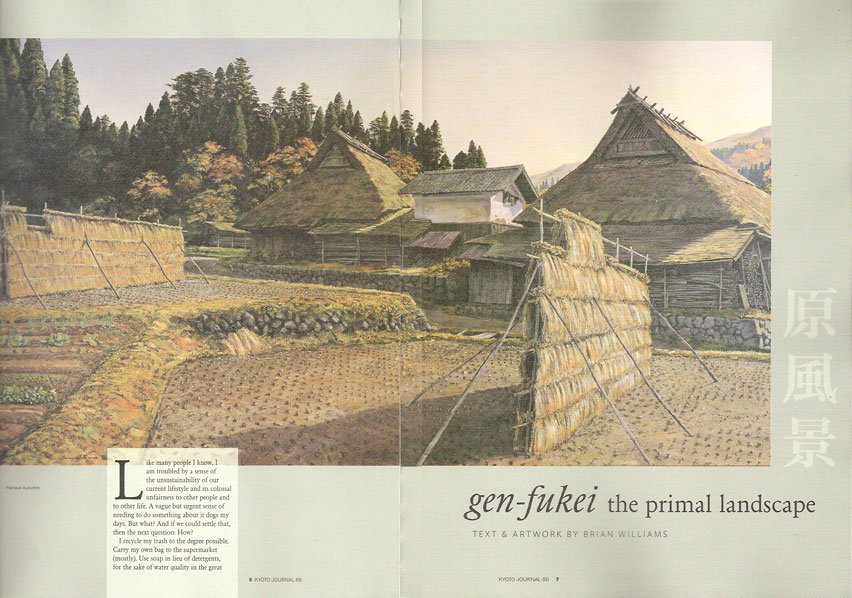
Brian's article on "gen-fukei" the original Japanese landscape in KJ #68: "New natural beauty, "shin gen-fukei", will be the litmus test of any sustainable lifestyle."

At work on Kiyomizu Temple...

However, in addition to the family and friends that Brian has made here over the years, it is perhaps his art that keeps him in Japan. “I have a sense that, as a landscape painter, I’ve never really gotten it! Of course Japan has four seasons, but there are so many seasons within those seasons, such as the cherry blossom season that passes so quickly. And now it is the season of the new green. The landscape is always new and changing and there’s still enough left unspoiled to keep me occupied.” And this is Brian’s mission: to record what is disappearing. He laments the rural architecture that has been lost and the waterways ruined under a “paroxysm of construction”. During the 39 years Brian has lived here 95% of the thatched roof houses have disappeared and countless rivers and canals have been lined with concrete. Brian however, as a keen environmentalist, does not believe this process is irreversible. In issue 68 of Kyoto Journal, he wrote a piece reimagining the Japanese concept of 原風景 (gen-fukei or primal landscape), a Japanese standard of natural beauty that also in modern times contains a feeling of nostalgia and loss. In Brian’s view, this notion of gen-fukei represents a stable ecosystem with plenty of biodiversity that can also sustain a human population. “Such landscapes are inherently beautiful. If we look at a landscape and it seems fruitful and bountiful then we sense that richness, that stability and balance as beauty.” And if you redefine gen-fukei in these ecological terms then it becomes possible to talk about regeneration or shin-gen-fukei. Brian himself has taken part in the replanting of reed beds in Lake Biwa, lives in his own 200 year-old converted farm house and is part of a grass roots environmental group that over the years has fought and stopped projected golf courses, dams, a tower, an airport and other follies that threatened to despoil the landscape he loves. Nevertheless, he admits, “As a landscape painter, it is painful to be in Japan; to see in my mind’s eye what was and to see before me what is”.  I asked him if he ever paints the destruction as well as those genfukei-type scenes of pristine natural beauty and indeed he does sometimes paint tetrapods and rusty barrels (he showed me some of his anti-war paintings too), but naturally these works tend not to sell so well.

I enjoyed talking with Brian. He is a great artist of course, but he is also a very nice chap with a lot of interesting things to say and a few hours in his company was a real pleasure. I’d like to thank him for taking the time out to talk to me, busy as he was with preparations for next Saturday’s event.

"I want to add my trickle to the great cultural river flowing through Kiyomizu Temple."

Brian’s exhibition at Kiyomizu Temple is one night only on Saturday May 14th from 8:00〜9:30 pm. Admission to the exihibit on the balconies is free but an entry ticket to the temple is required. It promises to be a very special evening. And, incidentally, he got his introduction to Kiyomizu from the very doctor who fixed up his knee after that life-saving accident back in 1995! Brian’s luck certainly hasn’t run out yet!

UPDATE: Here are some pictures from Brian’s exhibit at Kiyomizu Temple on May 14th 2011. A wonderful event!

To learn more about Brian and view more of his art, please visit his website: http://brianwilliamsart.com.

Also of interest: The Artist Daniel Kelly.

And soon to come: The Artist Sarah Brayer.

Clearing up the Mountain

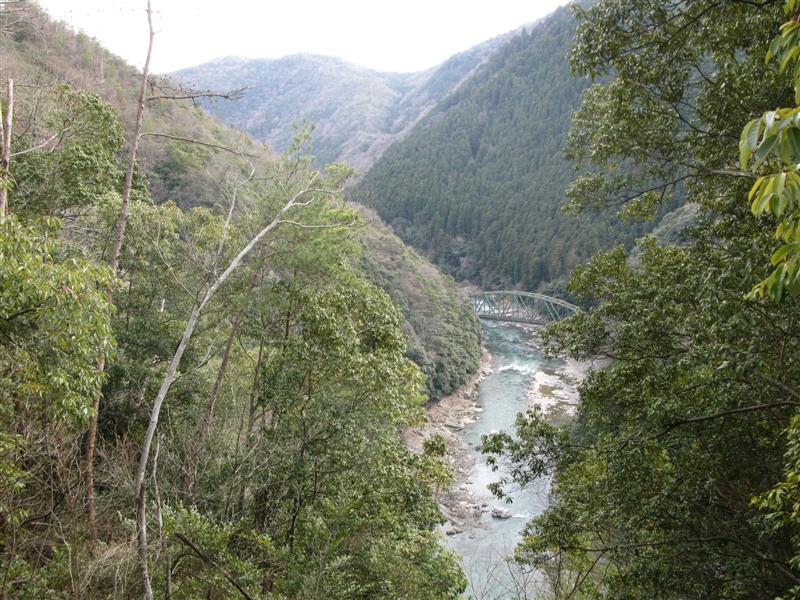
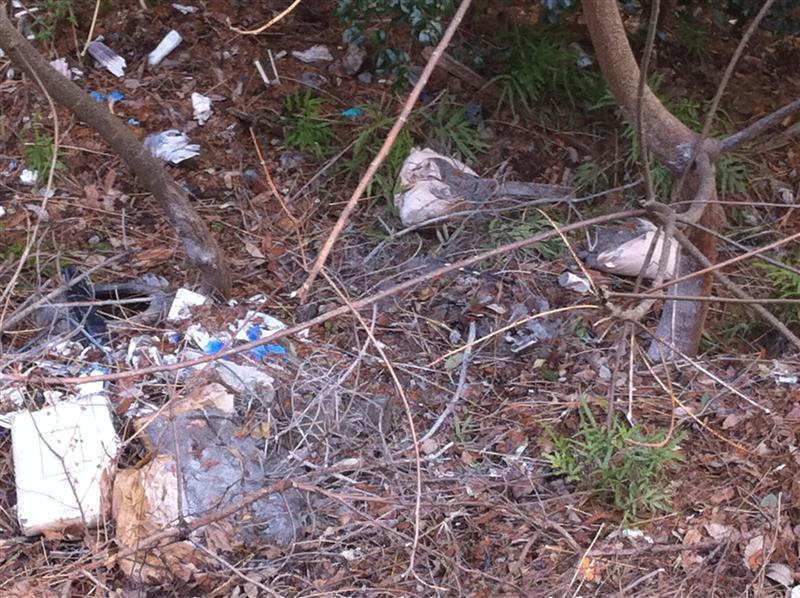
Lovely view, isn’t it? Sadly, right below where I stood to take this picture there are piles of rubbish that people have illegally tipped down the wooded slopes of Mount Ogura.

A lot of the discarded trash is domestic; buckets, bicycles, old refrigerators, motorbikes… But in this case a building company seems to have dumped some unwanted bags of cement. Perhaps they didn’t notice the cameras in the area that have been put up to prevent this kind of thing. If they are caught on film, they can be prosecuted…

P.T.O. volunteers collecting discarded trash from Mount Ogura.

I’ve written before about the work P.T.O. (People Together for Mt. Ogura) are doing to tackle conservation problems on the Poets’ Mountain. On Sunday I joined in one of their rubbish clearing days for the first time. I managed to rope in my friend Chris to come along too.

Once you get down there it is shocking how much stuff has been thrown away here. Apparently it was much much worse before the volunteers of P.T.O. started tackling the problem 7 years ago.

The rubbish is collected and then hauled up to the road.

Having been collected it will be taken away to be properly disposed of by the city later.

One afternoon's work - we were clearing a different spot in the morning.

Here we are when the day’s work is done. I’m holding a brass monkey I found underneath some bushes. Stephen Gill was rather taken with it and took it home….

It feels great to get out into nature, have a bit of a hike and then take part in this kind of activity. I always feel super energised by my visits to Mount Ogura and highly recommend it. Here below is the schedule for upcoming P.T.O. activities. If you would like to take part and lend a hand please contact Stephen Gill at heelstone@gmail.com. P.T.O. needs more bodies – and especially on rubbish collection days!

P.T.O. 2011 Hiking Schedule (with Work Content)

Apr. 2 (Sat.) Path maintenance

24 (Sun.) Rubbish clearance

May 7 (Sat.) Path maintenance

Jun. 4 (Sat.) Bamboo preparation

18 (Sat.) Path maintenance

Sep. 3 (Sat.) Bamboo fencing

17 (Sat.) Bamboo fencing

Oct. 2 (Sun.) Rubbish clearance

15 (Sat.) Dead pine felling

Nov. 5 (Sat.) Dead pine felling

19 (Sat.) Dead pine felling

27 (Sun.) Rubbish clearance

Dec. 3 (Sat.) Path maintenance

Useful links and articles:
People Together for Mt. Ogura – (P.T.O.’s English website)
People Together for Mt. Ogura – The Poets’ Mountain (article)
One Hundred Poets on Mount Ogura, One Poem Each (article)