Recently, renting kimono while sightseeing around Kyoto is very popular, and dressing up in traditional Japanese clothing can certainly be a lot of fun. In Japan, traditional clothes are called 和服 (wafuku which literally means “Japanese clothes”), to distinguish them from 洋服 (yōfuku or “Western clothes”). However, there are many different kinds of wafuku, so in this article we will look at the main kinds of clothes that you are likely to wear if you have the opportunity to dress up in traditional wear. As you will see, there are distinct clothes for men and women, for formal and casual wear, and for different occasions and seasons.
Disclosure: Links in this article to the Japan Objects Store are affiliate links. The owner of this website may earn a commission from qualifying purchases.
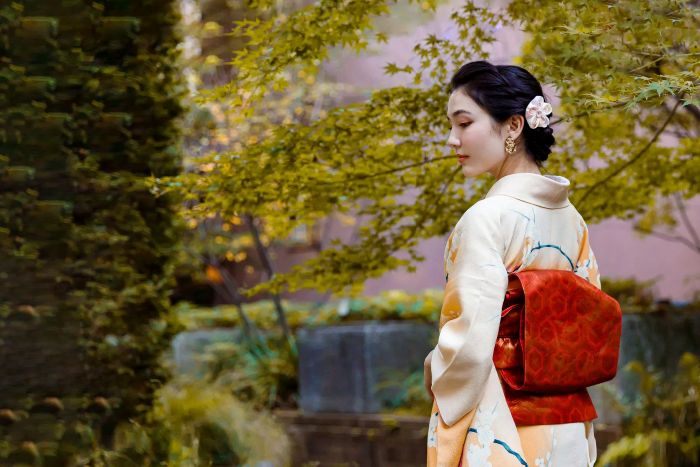
Kimono (着物) – For many people the kimono represents Japan’s national costume, and is a symbol of elegance and grace. Literally, however, “kimono” simply means “something to wear”, a vague term that covers a lot of variety. As a general rule, women’s kimono tend to have very bright and colorful seasonal designs, while men’s kimono tend to have plainer designs and darker colors. Below are some common kimono types:
* Furisode (振袖) are long-sleeved kimono worn by young single women for formal occasions such as weddings, or the Coming of Age ceremony when they turn 20. Furisode are made of silk and have very bright, colorful designs.
* Hōmongi (訪問着) are semi-formal kimono suitable for both single and married ladies and are likely to be worn to a tea ceremony or a friend’s wedding.
* Komon (小紋) are more casual kimono for ladies with a finely detailed repeated pattern. They come in a great variety of designs and colors and are suitable for wearing around town. If you rent a kimono while sightseeing it is likely to be a komon.
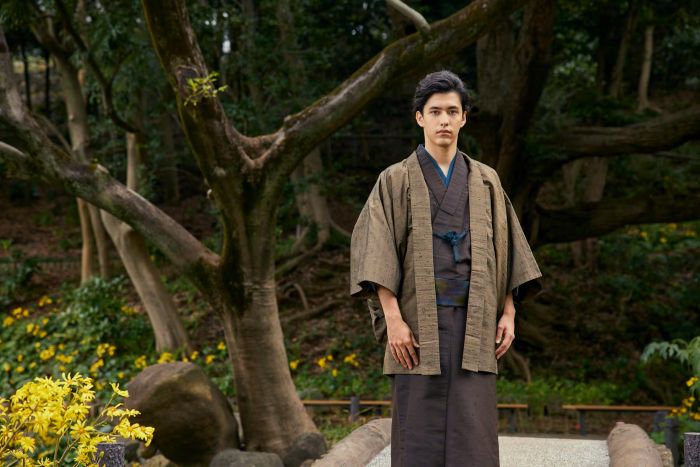
* Men’s kimono tend to have less variety than those for ladies. For formal occasions men will wear a kimono with a hakama skirt and haori jacket. Dressing in a kimono without a hakama is more casual and called kinagashi (着流し). However, for men the level of formality is basically decided by the grade of material used, such as fine silk for formal occasions, and lower-grade tsumugi silk (sometimes called pongee) for less formal occasions.
Kimono Accessories – Below are listed some of the main accessories for kimono:
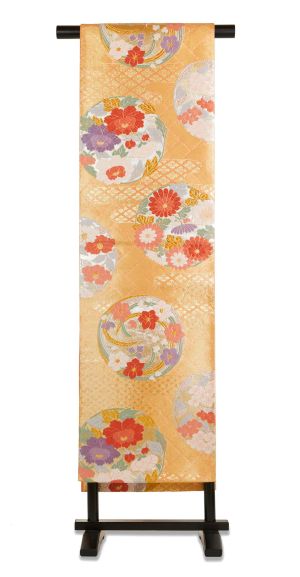
* Obi (帯) is a kind of belt or sash for a kimono. There are many kinds and patterns, but women’s obi are wider and men’s are much narrower and simpler in design.
* Nagajuban (長襦袢) is a long undergarment for ladies and men which is worn under the kimono. They are usually brightly decorated because they are visible at the collar and the sleeves of the outer
garment. Though men’s kimono are quite plain, their nagajuban can add a dash of color to the outfit.
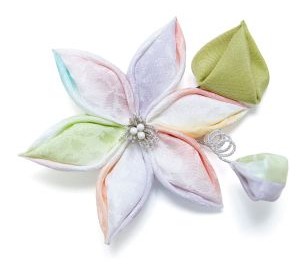
* Kanzashi (簪) are ornate hairpins used for ladies’ traditional hairstyles.
* Hakama (袴) are a kind of long pleated skirt worn by men or women over a kimono. Men wear hakama to formal occasions, while women might wear hakama if they take part in martial arts such as kyūdo, or kendo, or for university graduation ceremonies.
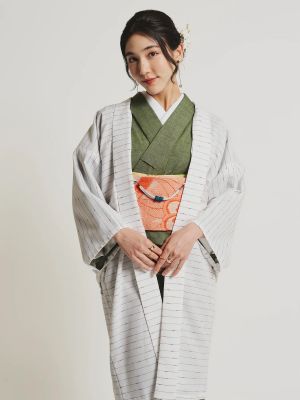
* Haori (羽織) is a jacket worn over kimono by men and women.
* Tabi (足袋) are split-toed socks worn with zōri or geta sandals.
* Zōri (草履) are thonged sandals often made with leather, cloth, or vinyl, and which should be worn with tabi socks.
* Geta (下駄) are wooden sandals which can be worn with or without tabi socks.
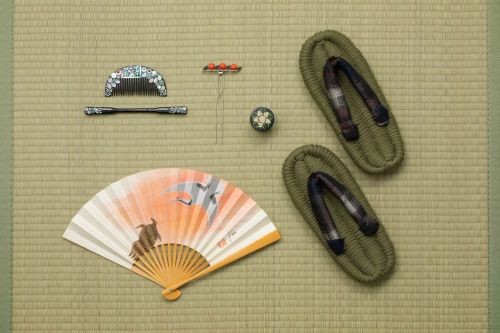
Kimono Alternatives:
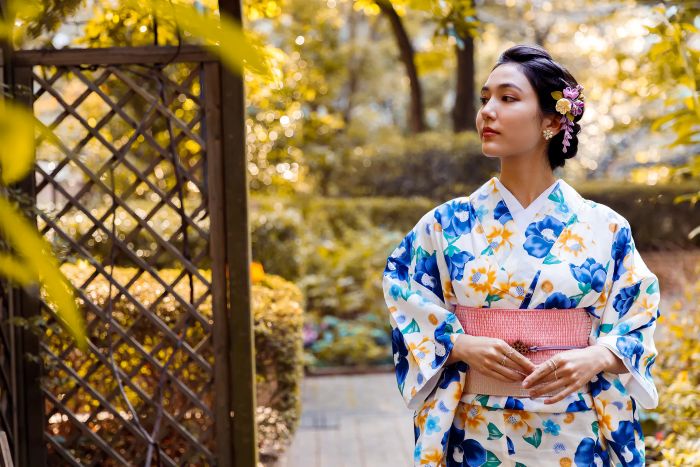
* Yukata (浴衣) are light, casual kimono for men and women, usually made of cotton and worn in the summer or as loungewear. You are likely to wear yukata if you go to a Japanese summer festival or fireworks display. If you visit a traditional hotel or hot spring resort, your hotel will probably supply yukata to wear around the premises.
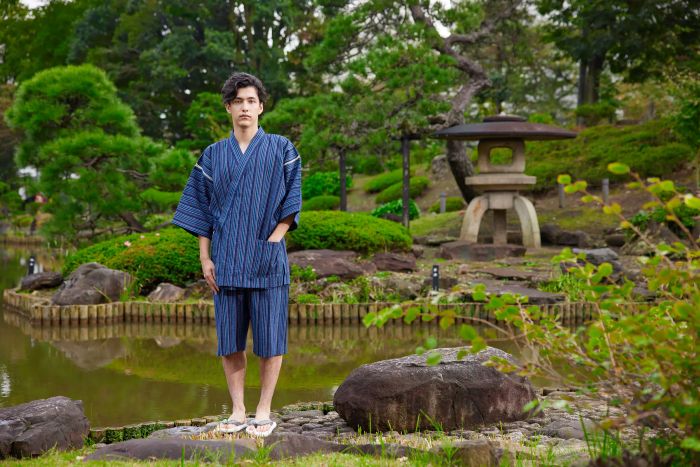
* Jinbei (甚平) are the most casual (and most comfortable) wafuku. Similar in form to Western pajamas, they consist of a matching top and shorts made from linen or cotton. Mainly a form of loungewear to be worn around the home, they are also often worn to summer festivals by men and children. Recently young women also wear brightly colored jinbei to summer festivals.
Full text by Michael Lambe. Images courtesy of Japan Objects. All rights reserved.
All links below are affiliate links. The owner of this website may earn a commission from qualifying purchases.
Vintage Kimono
Vintage Japanese kimono are made from 100% pure silk and are usually custom-made, often for a special event or celebration. In many cases, they’re only worn once, which means these beautiful, one-of-a-kind pieces are in almost perfect condition, and can be bought at a much lower price than when they were first made. Each vintage kimono is totally unique and shows the incredible craftsmanship and creativity of traditional Japanese design. For sizes more details on each product, please click through to the links.
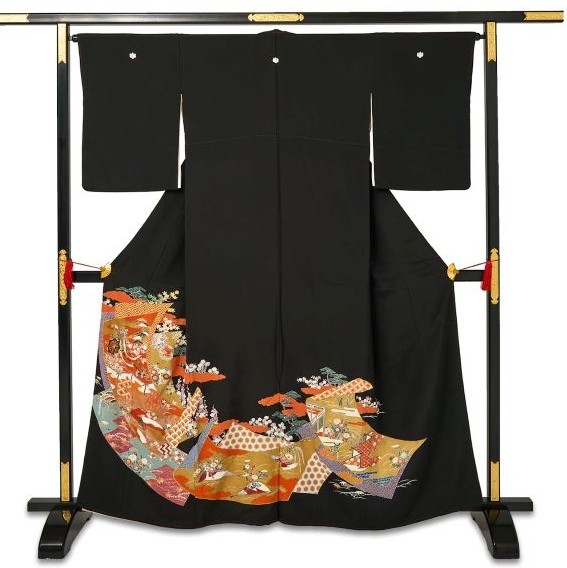 Women’s Vintage Koen Silk Japanese Kimono Women’s Vintage Koen Silk Japanese Kimono$310.49 USD |
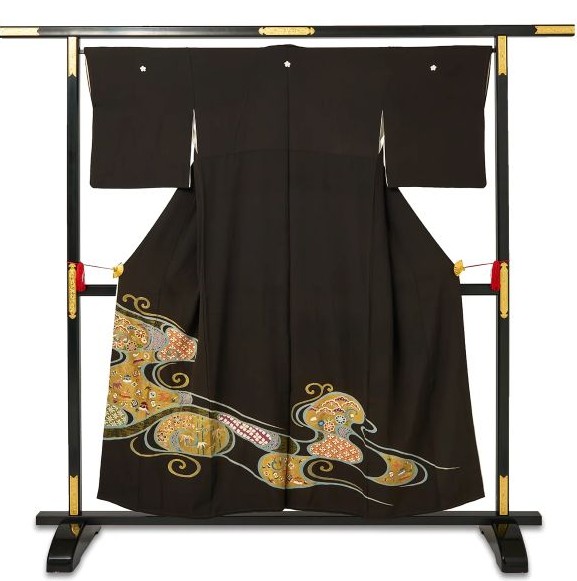 Women’s Vintage Nagare Silk Japanese Kimono Women’s Vintage Nagare Silk Japanese Kimono$310.49 USD |
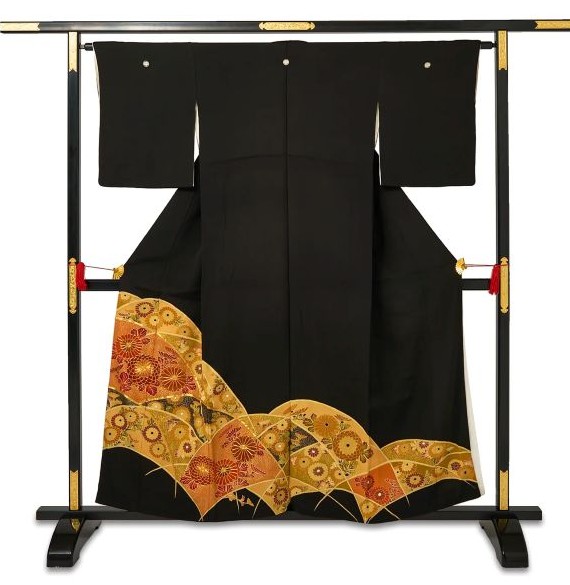 Women’s Vintage Black Kiku Silk Japanese Kimono Women’s Vintage Black Kiku Silk Japanese Kimono$310.49 USD |
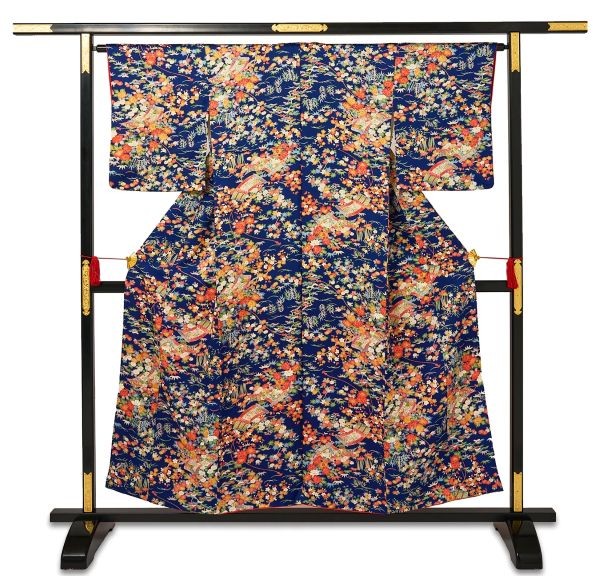 Women’s Vintage Yugure Silk Japanese Kimono Women’s Vintage Yugure Silk Japanese Kimono$252.99 USD |
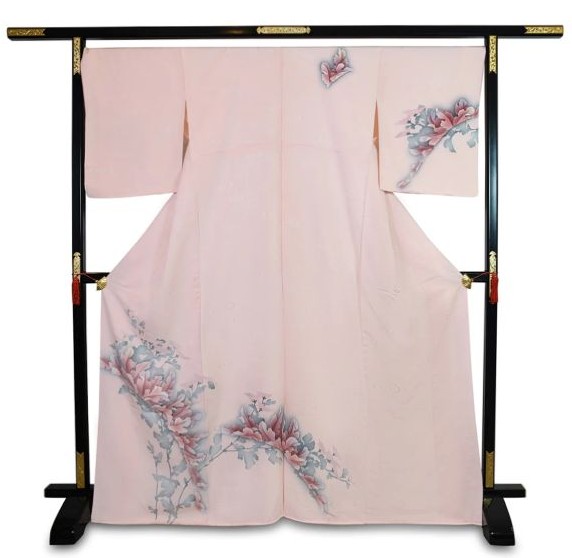 Vintage Silk Botan Japanese Kimono Vintage Silk Botan Japanese Kimono$241.49 USD |
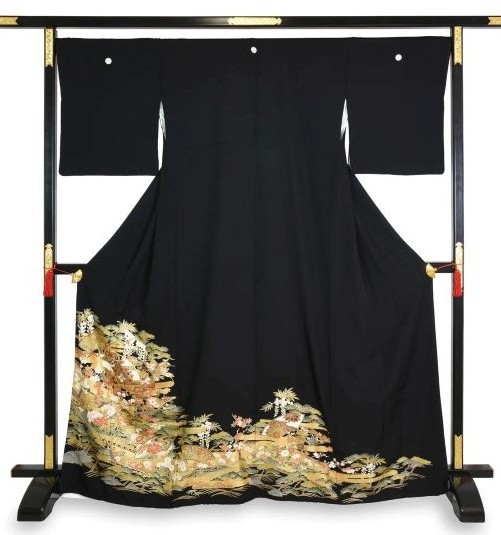 Vintage Silk Garden Black Kimono Vintage Silk Garden Black Kimono$241.49 USD |
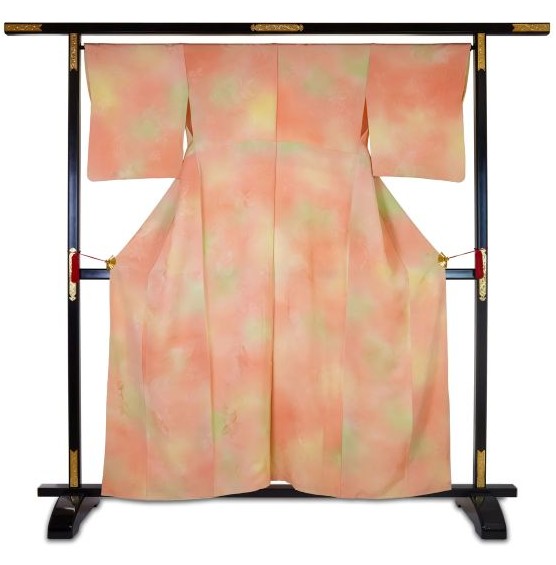 Vintage Silk Momo Japanese Kimono Vintage Silk Momo Japanese Kimono$241.49 USD |
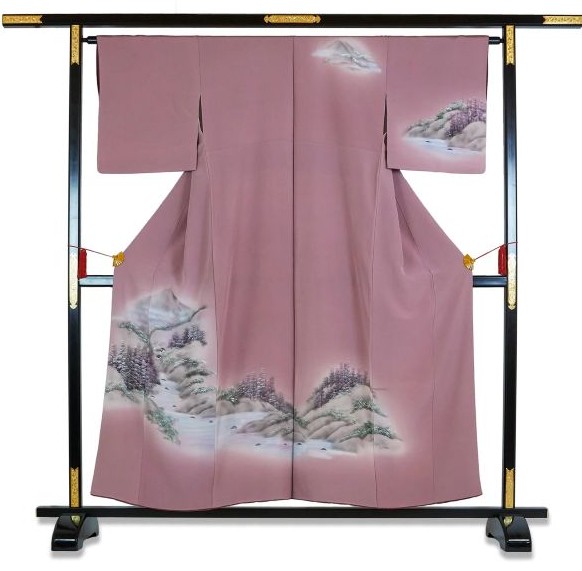 Vintage Silk Forest Kimono Vintage Silk Forest Kimono$333.49 USD |
To view more vintage silk kimono, cotton kimono, yukata, vintage obi belts, haori jackets, footwear, kimono accessories, hair accessories and traditional menswear please visit the Japan Objects store.
Learn more
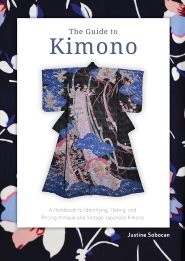 The Guide to Kimono The Guide to Kimonoby Amazon.com Amazon.co.jp |
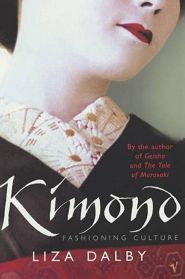 Kimono: Fashioning Culture Kimono: Fashioning Cultureby Liza Dalby Amazon.com Amazon.co.jp |
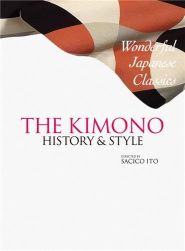 The Kimono: History and Style The Kimono: History and Styleby Sacico Ito Amazon.com Amazon.co.jp |
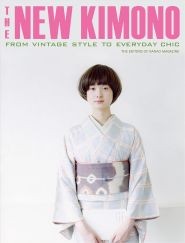 The New Kimono The New Kimonoby Nanao Magazine Amazon.com Amazon.co.jp |
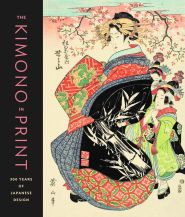 The Kimono in Print The Kimono in Printby Vivian Li Amazon.com Amazon.co.jp |
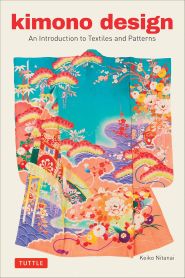 Kimono Design Kimono Designby Keiko Nitanai Amazon.com Amazon.co.jp |
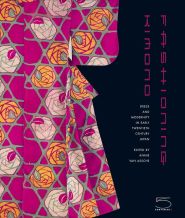 Fashioning Kimono Fashioning Kimonoby Annie M. Van Assche Amazon.com Amazon.co.jp |
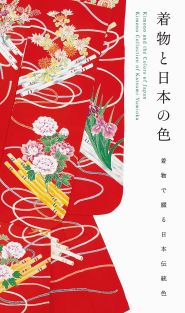 Kimono and the Colors of Japan Kimono and the Colors of Japanby PIE International Amazon.com Amazon.co.jp |



Leave a Reply