The Japan Kanji Museum is a place I’ve been wanting to go to for a super-long time and in December I finally managed it. I enjoyed my visit, but before I proceed I should say right away that this museum might not appeal to you if you can’t read Japanese. Apart from in the special exhibition area, all the display information is in Japanese only. There are some English-language audio guides, but I can’t imagine kanji displays are that interesting if you can’t read them at all.
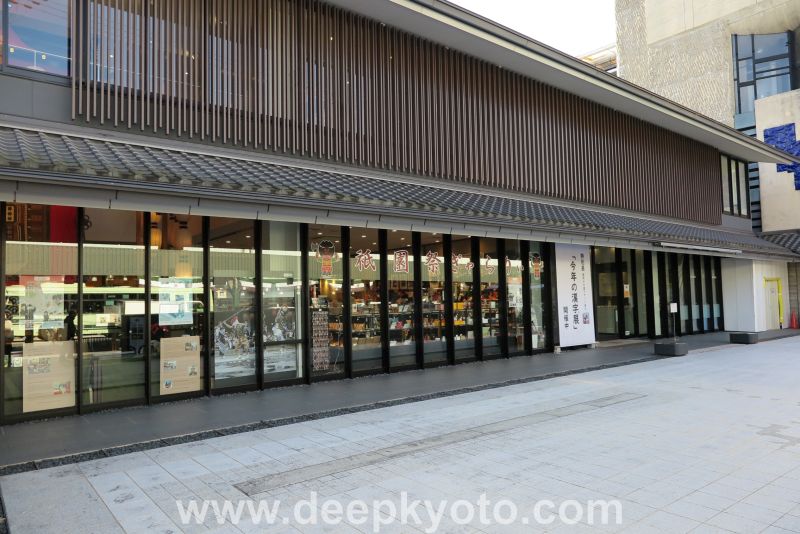
Having said that, this is a family-friendly museum with lots of interactive displays, and the display information is written in relatively simple Japanese which is clearly aimed at a young audience — so if you have some basic reading ability you should be ok.
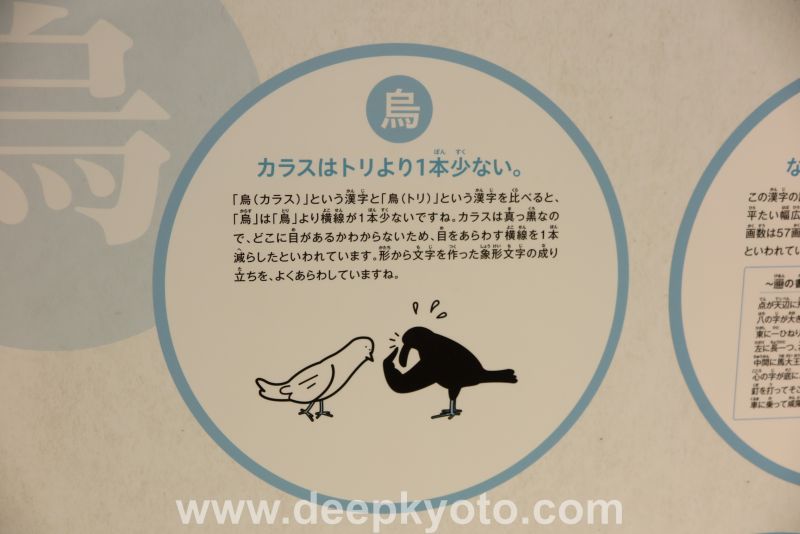
And by basic reading ability I mean if you can read the explanation above of why the kanji 烏 for karasu or “crow” has one less stroke than the kanji 鳥 for tori or “bird.” If you can read that, then you’ll probably enjoy a visit to this museum!
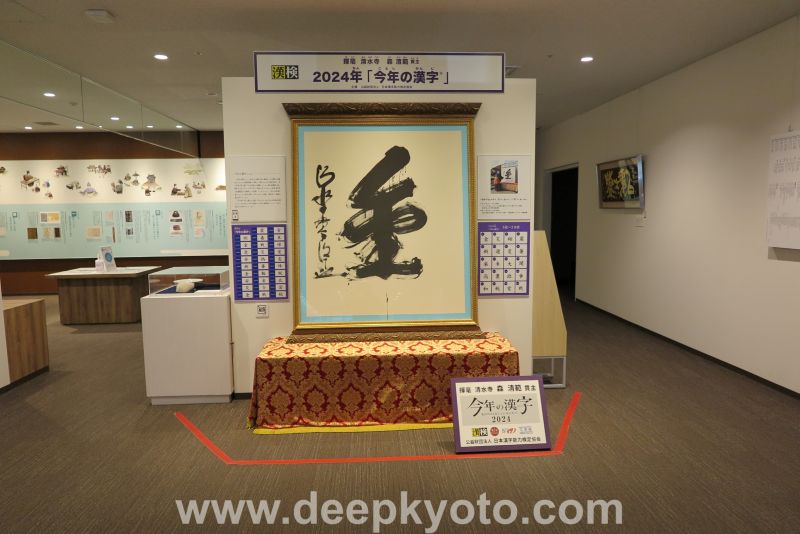
The first thing you will see after buying your ticket is the most recent Kanji of the Year, which for 2025 is actually 熊 or “bear.” When I visited in early December though, the 熊 kanji had only just been chosen and was not yet on display. The picture above shows the 2024 kanji, which was 金 or gold — more about that later.
After that you’ll find a theater room showing a short video, the message of which could be summed up as “Gee whiz! Kanji are amazing!” — which they are of course, but you probably won’t learn that much from the video. The rest of the museum though is very educational.
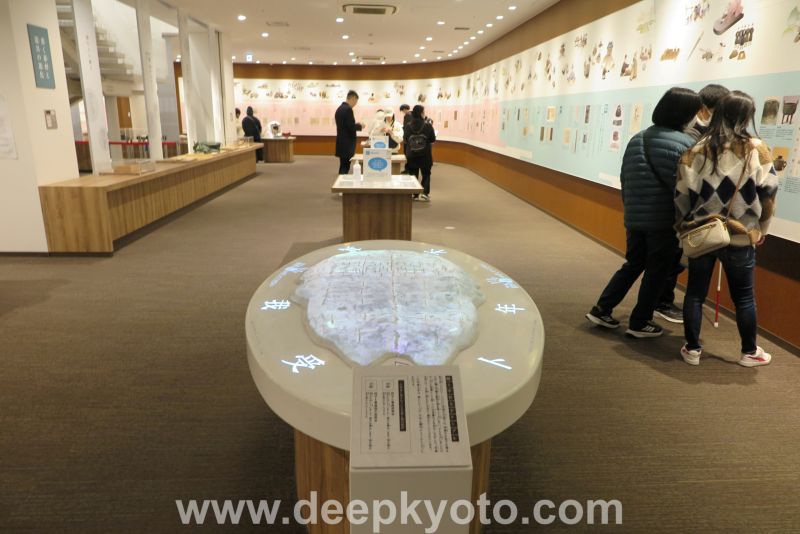
Along the wall of the first floor of the museum is “picture scroll of kanji” that charts the history of kanji from their origins in Chinese oracle bone inscriptions, through their arrival in Japan in the 5th century, how the Japanese adapted kanji into phonetic kana, and then right up to the current use of kanji in the age of computers.
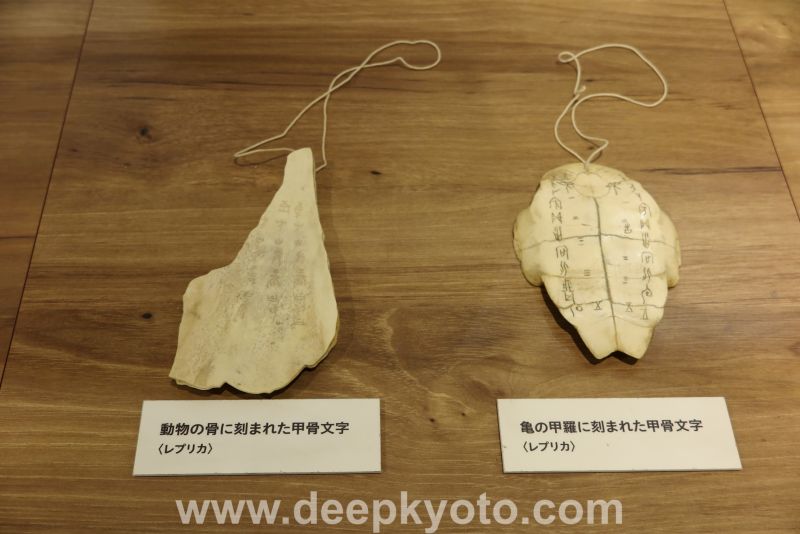
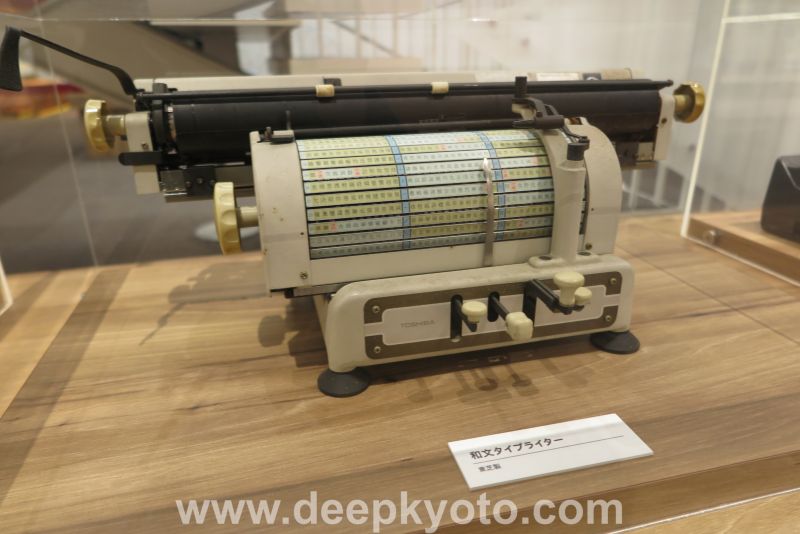
There are displays around the room of historical items — or replicas of historical items — that help to bring the history to life, and there are also some entertaining interactive displays. The “dancing oracle bone table” for example, has modern kanji written around the edges — when you hold your hand over a kanji, it morphs into an ancient oracular inscription which floats up and takes its place upon the divinatory bone.
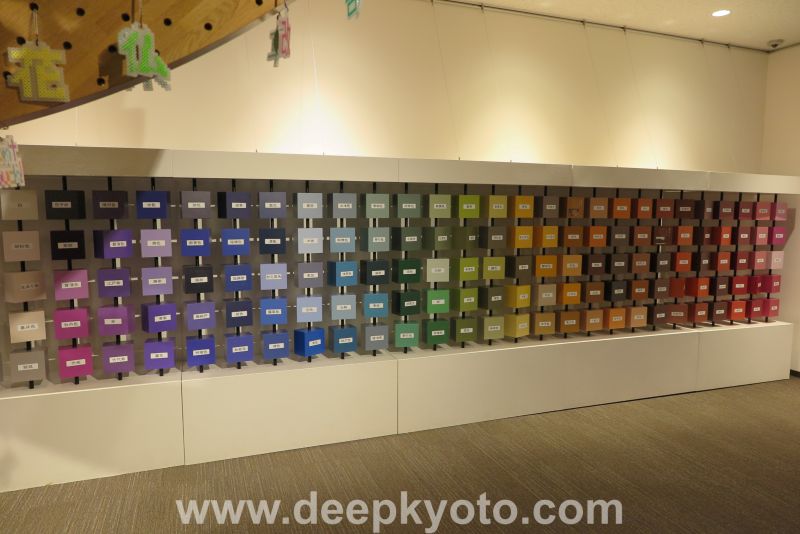
There’s also a table where you can learn how to write your name in Manyo-gana. Now if you don’t know what Manyo-gana is, it’s basically an old system for writing Japanese phonetically using Chinese characters. I only mention it because this table was hugely popular — there were a lot of people of all ages around it and they all seemed to be really enjoying this simple activity. Who knew ancient writing systems could be such fun?
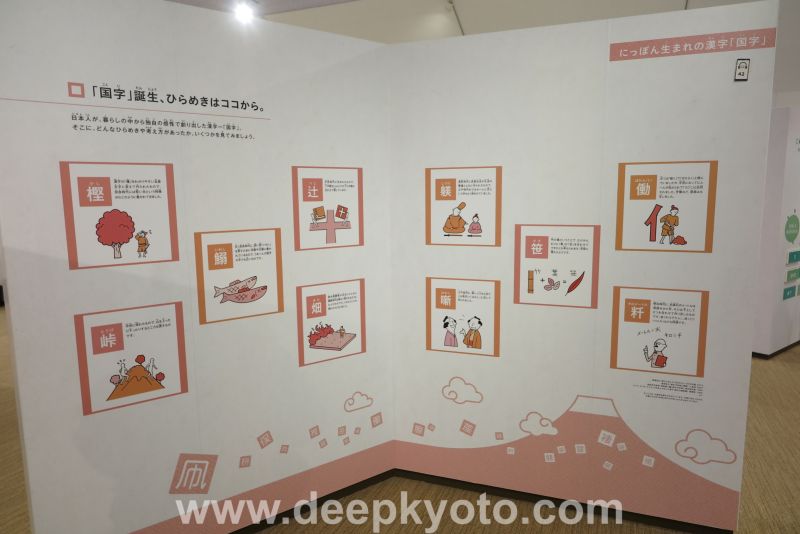
The second floor is designed to be like a kanji theme park, with a variety of displays showing different aspects of kanji in interactive ways. I actually really enjoyed this part of the museum and felt like I could learn a lot here. There was a whole section related to kanji used for place names in Kyoto, another for kanji used for the Gion festival, a section about kanji that were created in Japan, another section dedicated to the kanji of local dialects, a touch panel game dedicated to 四字熟語 (yojijukugo) or four-character idioms — and many, many more.
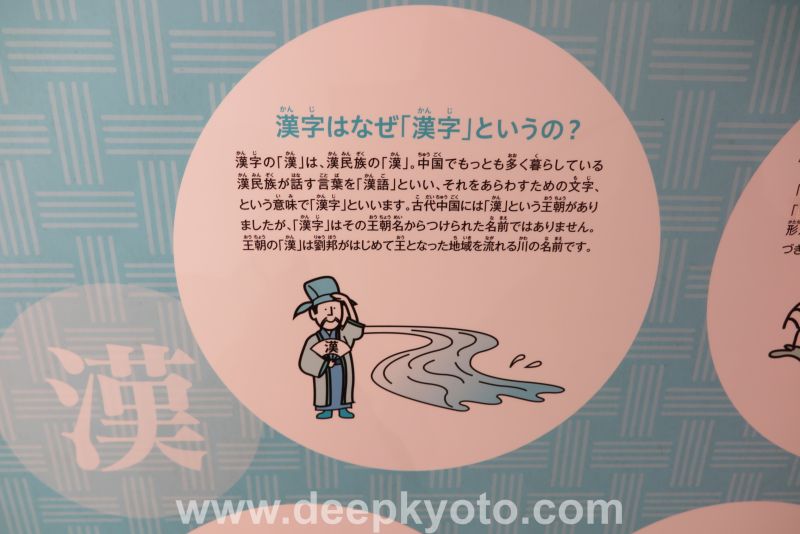
In the “おもしろ漢字ばなし” booth you can learn interesting things like the explanation of the karasu kanji we looked at above, and also why 漢字 (kanji) are called 漢字.
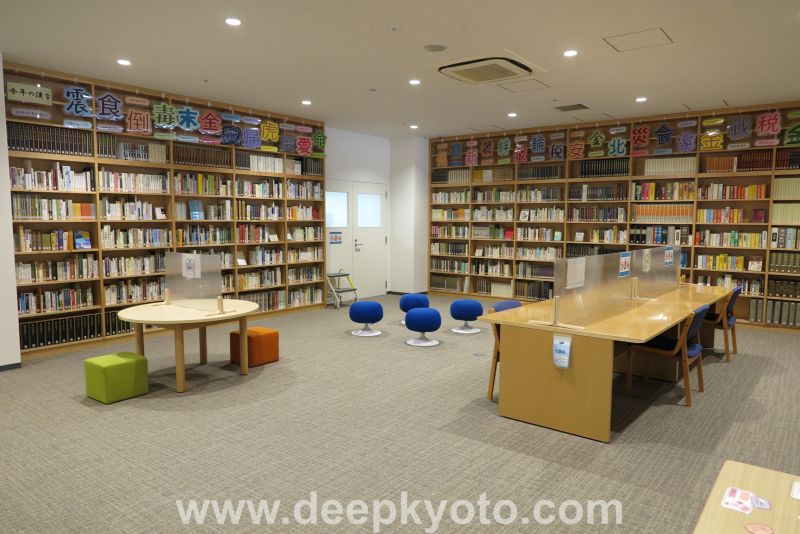
Also on the second floor there is a small library and a special exhibition area. When I visited the special exhibition was “The Kanji of the Year.” Every year in December, one kanji that is felt to best represent the year is chosen by a national ballot and the winning kanji is announced in a special ceremony at Kiyomizudera Temple in Kyoto. The announcement is done with dramatic flourish by having the chief priest of Kiyomizudera write the kanji in beautiful calligraphy on a man-sized sheet of paper.
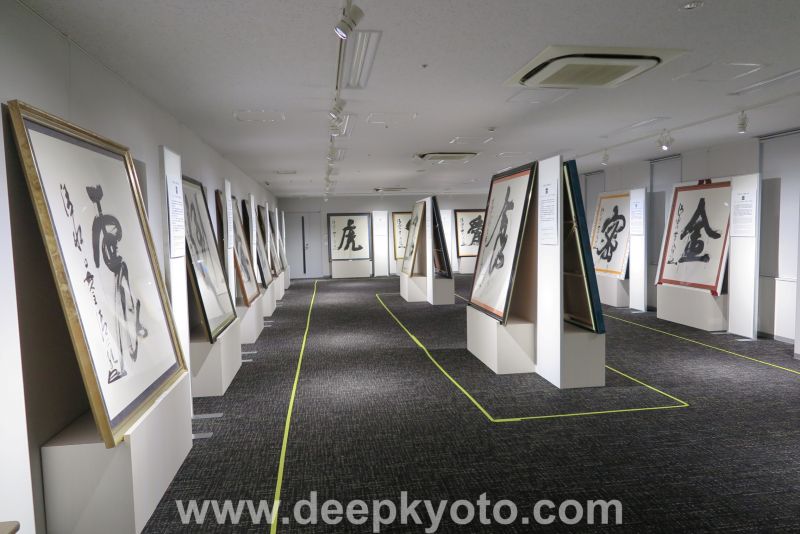
In the exhibition you can see the original calligraphy for the kanji for each year dating all the way back to 1995. There is also some information about why each kanji was chosen, and this is given in English as well as Japanese. The kanji 金 kin or “gold” comes up multiple times, because it basically gets chosen every Olympic year when Japanese athletes manage to get a few gold medals. This shows a distinct lack of imagination in my view, but apart from that there is some quite powerful calligraphy on show and having lived in Japan for many years viewing all the different kanji felt like a trip down memory lane.
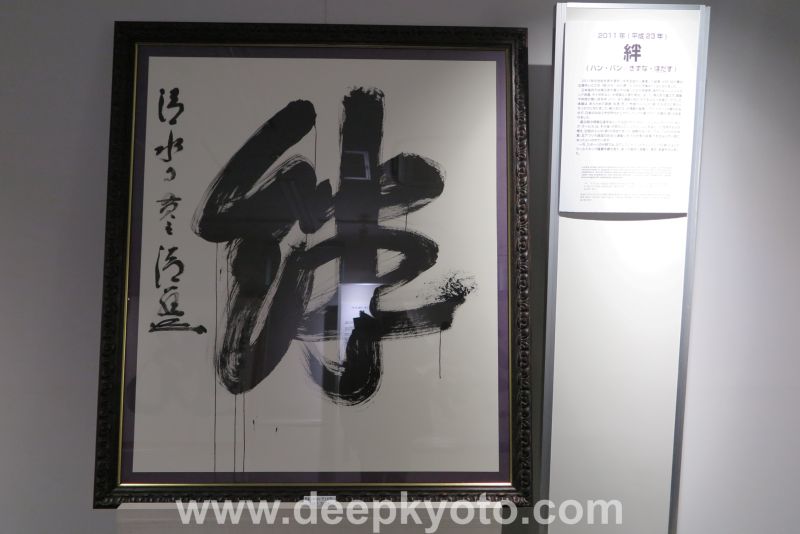
I also felt a little pang of emotion being reminded of the kanji for 2011, the year of the Tohoku earthquake and tsunami. That year the kanji was 絆 kizuna or “bonds,” which I thought was a beautiful choice in the face of extreme adversity.
The Kanji of the Year exhibition will end soon — February 23rd — but it returns every year in October, so there’ll be plenty of opportunity to see it again.
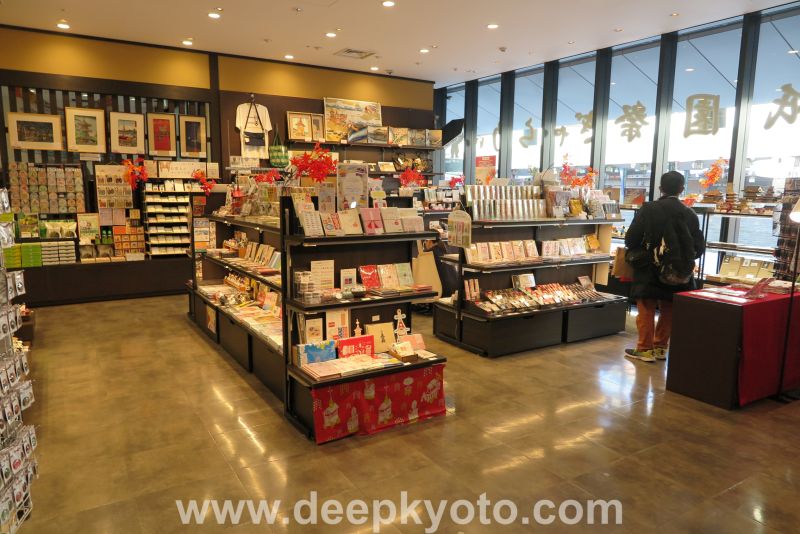
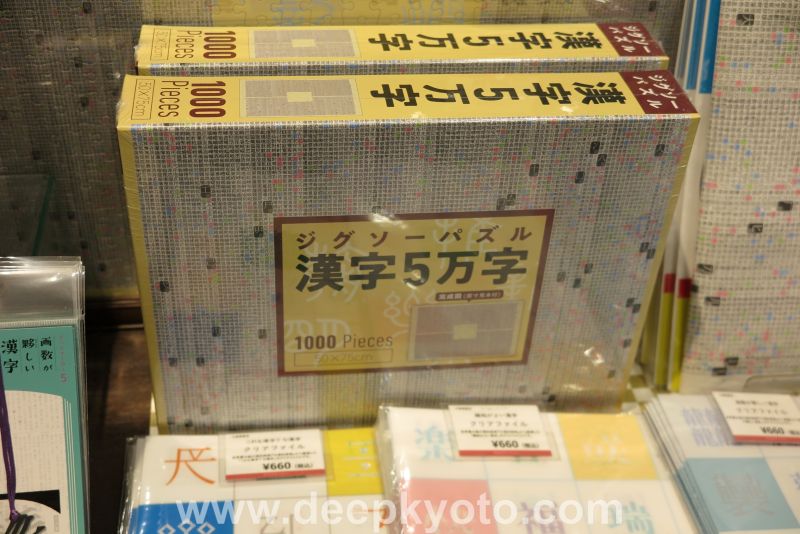
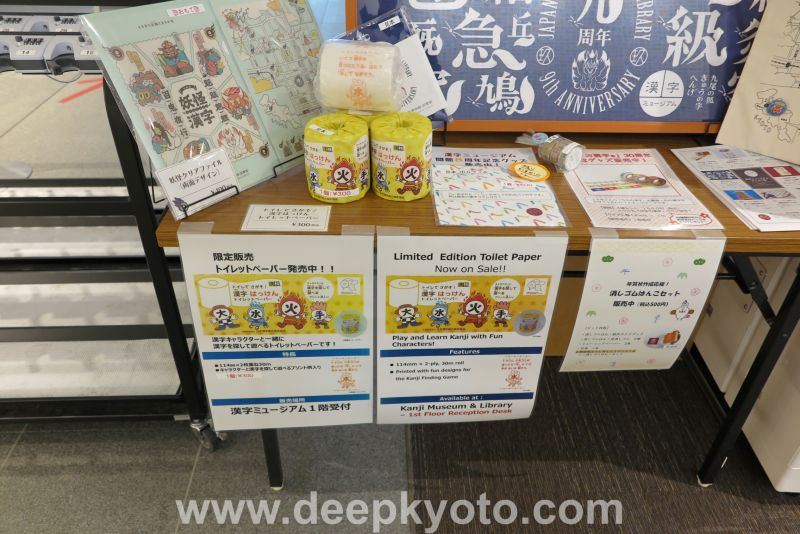
Back on the first floor I stopped by the museum shop to see what kind goodies they have. There were a small amount of kanji-related items, but mainly it was the usual Kyoto-themed souvenirs that you can get anywhere. I was a bit tempted by the limited edition kanji toilet paper though.
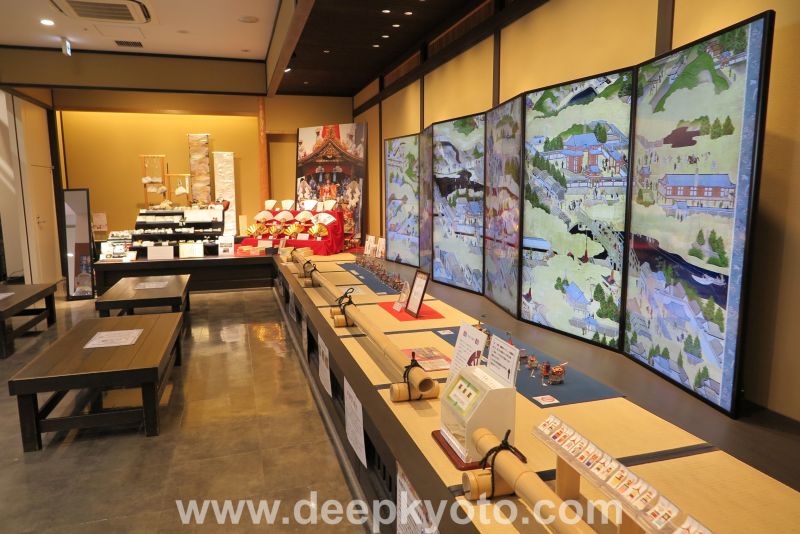
Also on the first floor beside the shop is a Gion Festival gallery, with festival-related items on display and a full-sized parade float as well.
The Japan Kanji Museum is open from 9:30-17:00 ((last entry at 16:30).
Closed on Mondays (or the following day if Monday is a national holiday).
Also closed for New Year holidays.
Admission is 800 yen for adults, 500 yen for high school/university students and 300 yen for elementary school students.
Audio guides are available in English, Chinese, and Korean and cost 500 yen to use.
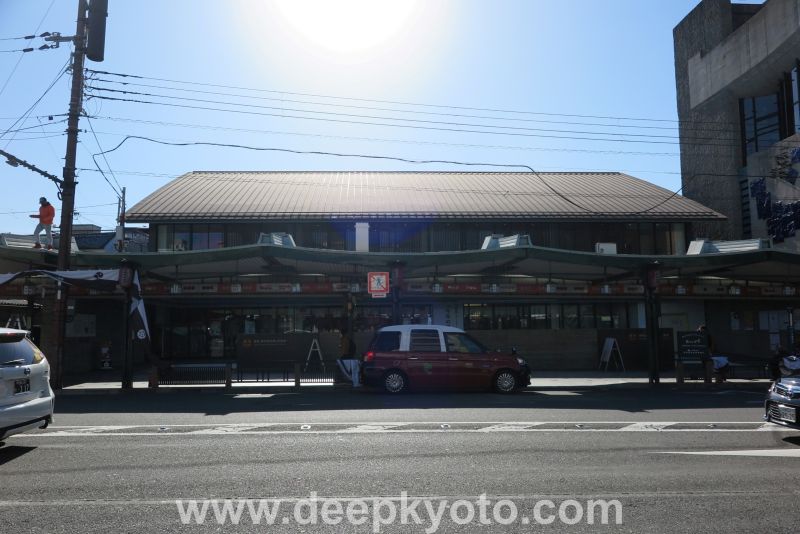
The museum is located on the south side of Shijo Dori, just a short distance from Yasaka Shrine. Here is a map showing the location.
And if you are interested in studying kanji, you might want to check out this brief guide.
Full text and all images by Michael Lambe. All rights reserved.



Leave a Reply