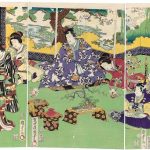
From Ian Ropke, This month visitors will have a great chance to photograph children all dressed up in kimono, a special opportunity not to be missed. November is the month of the shichi-go-san (7-5-3) ritual for girls (seven and three years of age) and boys (five years of age). Shichi-Go-San is believed to have started in the Heian Period (794-1185). It was a ritual … [Read more...] about Shichi-go-san: A Special Ritual for Child Health and Longevity
Search Results for: ian ropke
Takeuchi Seihō – Japan’s most important modern Japanese-style painter
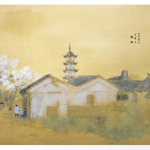
Takeuchi Seihō (竹内 栖鳳 - his real name was Takeuchi Tsunekichi) lived from December 20, 1864 - August 23, 1942. He was an early master of nihonga art, and prior to World War II led a notable circle of painters in Kyoto. His former residence in Higashiyama still stands as The Sodoh - now a restaurant and event space. Ian Ropke writes, During Takeuchi’s early youth his … [Read more...] about Takeuchi Seihō – Japan’s most important modern Japanese-style painter
the能.com probably has pretty much everything you need to get started with Noh drama…
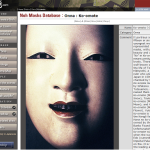
I have been following Diego Pellecchia's facinating Noh blog for a couple of months now. Diego is training with the Kongō school of Noh, here in Kyoto and his blog offers a kind of portal into that world. Wanting to learn more, last week I asked him if he could recommend any beginner's texts as an introduction to the world of Noh. Rather than a text he recommended this website, … [Read more...] about the能.com probably has pretty much everything you need to get started with Noh drama…
Shinto – Deities, Shrines and Symbols
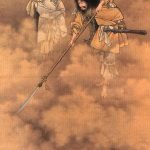
Ian Ropke writes, Shinto is Japan’s original religion and today it maintains a strong position next to the country’s other main religion: Buddhism. It is interesting to note that nearly all Japanese do not even know what the word Shinto means. The word Shinto comes from the Chinese characters: god and path. Elegantly translated Shinto means The Way of the Gods. Today, if you … [Read more...] about Shinto – Deities, Shrines and Symbols
Kyoto Antiques: Shopping & Window Shopping
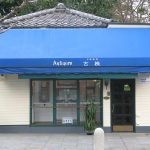
Ian Ropke writes, There are two areas in Kyoto known for antiques: Teramachi and Shinmonzen. Both areas are perfect for window shopping and, naturally, shopping. Teramachi, south of Marutamachi, north of Oike but mostly north of Nijo, is Kyoto’s newest antique center. It is more casual, and often quite a bit cheaper when it comes to antiques pure and simple … [Read more...] about Kyoto Antiques: Shopping & Window Shopping
Deep Kyoto at Four
Today is Deep Kyoto's birthday! On June 8th 2007 I sat down and wrote in my very first blog post: ...there are many “British-style” pubs and Starbuckses aplenty if you need to retreat back to your comfort zone, and no blame to you if you do. But if you want to challenge yourself a bit further, dust off that phrasebook and encounter the average people who make up modern Kyoto, … [Read more...] about Deep Kyoto at Four
Kyoto Kanban: Unique Shop Signboards in the Old City
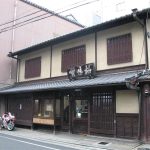
Ian Ropke writes, Japan’s ingenious and eye-catching signboards known as kanban are unique. The earliest examples avoided the use of words, presumably because they couldn't have been read by an illiterate public, and often focused on the shape of the product, or the form of the container in which it was sold. Larger than life carvings of objects such as geta, candles, … [Read more...] about Kyoto Kanban: Unique Shop Signboards in the Old City
Sencha – The Chinese Way of Tea
Disclosure: Some links in this article are affiliate links from which the owner of this website may earn a commission. Ian Ropke writes... Mention tea ceremony and most Japanese will think of chanoyu, the way of tea based on a ritual for drinking the powdered green tea called matcha, which was formalized by Sen no Rikyū in the sixteenth century. Much closer to … [Read more...] about Sencha – The Chinese Way of Tea
Ryokan Pleasures & Possibilities
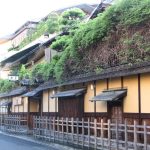
The Exotic World of the Japanese Inn Ian Ropke writes… At the beginning of the 20th century in Japan and Europe and elsewhere, there was a class of people, often men, who spent great portions of their life living in inns and hotels. Yasunari Kawabata, the first Japanese to win the Nobel Prize for Literature, was one of the last people to live in ryokan in what could only be … [Read more...] about Ryokan Pleasures & Possibilities
Saiundo Traditional Art Supply Shop
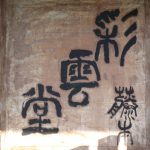
Today's post from Ian Ropke is a continuation of yesterday's post on Nihonga... The classic Japanese artist’s best friend For well over one hundred years, Saiun-do has been supplying artists with quality Nihonga pigments and brushes. The business has an illustrious history. The famous painter Tomioka Tessai (1836-1924), just one of Saiundo’s illustrious clients, recommended … [Read more...] about Saiundo Traditional Art Supply Shop
Nihonga – The History of Traditional Japanese Painting
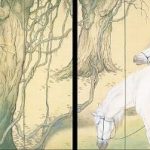
Ian Ropke writes... The history of traditional Japanese painting The history of Nihonga, the traditional Japanese manner of painting, can be traced back to the beginning of the Heian period. A manuscript from 999 mentions a style of painting called Yamato-e (Yamato was the old name of Japan). When exactly this new school of painting originated is not known, but it is … [Read more...] about Nihonga – The History of Traditional Japanese Painting