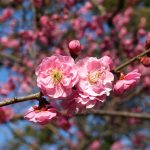
On my way home from Kitano Tenmangu Shrine the other day, I stopped by the Imperial Palace Park to enjoy the plum blossom. The trees at Kitano Tenmangu are probably more famous, but the shrine grounds were also a lot more crowded. Though each tree in the park had its admirers, there was really only a small scattering of people around, and so I could enjoy the blooms in a more … [Read more...] about Plum Blossom at the Imperial Palace Park
Culture & Tradition
梅花祭 ~ Plum Blossom & Geisha at Kitano Tenmangu Shrine
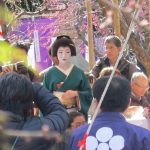
Kitano Tenmangu Shrine has a huge flea market on the 25th of every month, but on the 25th of February this coincides with the peak period for plum blossom viewing. Naturally this calls for a special celebration so every year they hold a special outdoor tea ceremony with geiko and maiko (Kyoto's geisha) serving the tea. I went along today and found the place packed out with … [Read more...] about 梅花祭 ~ Plum Blossom & Geisha at Kitano Tenmangu Shrine
Maiko at Yasaka Jinja
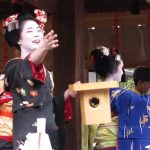
Maiko, Kyoto's apprentice geisha, at Yasaka Jinja today celebrating Setsubun. First they do a little dance. Then they throw their lucky beans. Both the maiko and the crowds were awfully excited about those lucky beans... Setsubun is celebrated at Yasaka Jinja every year in both the 2nd and 3rd of February, though the festival proper is on the 3rd. To … [Read more...] about Maiko at Yasaka Jinja
Kawai Kanjiro’s House
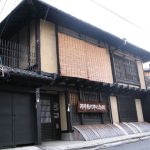
This is the house of Kawai Kanjiro, a legendary potter and a key figure in the mingei or Japanese folk art movement. His beautiful wooden townhouse has been preserved as a memorial run by his family. The building itself and the garden are wonderful, but you can also see here many of his works: ceramics, sculptures, and woodcarvings. His kilns are preserved at the back of the … [Read more...] about Kawai Kanjiro’s House
Shinto – Deities, Shrines and Symbols

Ian Ropke writes, Shinto is Japan’s original religion and today it maintains a strong position next to the country’s other main religion: Buddhism. It is interesting to note that nearly all Japanese do not even know what the word Shinto means. The word Shinto comes from the Chinese characters: god and path. Elegantly translated Shinto means The Way of the Gods. Today, if you … [Read more...] about Shinto – Deities, Shrines and Symbols
Furansisko no Ie
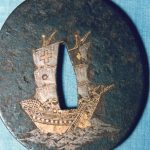
Here's a new post from our good friend, John Dougill. Near Shijo Omiya is a small museum called Furansisko no Ie. From the outside it’s unremarkable; inside is a small exhibition room with items from the sixteenth and seventeenth centuries. They represent the time when Christianity first arrived in Japan, before falling into disfavour and being banned. What marks the … [Read more...] about Furansisko no Ie
Kasagake at Kamigamo on October 16th
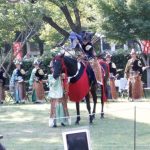
John Dougill writes, There were traditionally three styles of horseback archery carried out for the entertainment of the kami. The most well-known is Yabusame, in which galloping riders shoot at a fixed target. Much rarer is Kasagake, to be performed this Sunday at Kamigamo Jinja. The other style involved firing at live dogs: thank goodness, it's no longer … [Read more...] about Kasagake at Kamigamo on October 16th
Kyoto Antiques: Shopping & Window Shopping
Ian Ropke writes, There are two areas in Kyoto known for antiques: Teramachi and Shinmonzen. Both areas are perfect for window shopping and, naturally, shopping. Teramachi, south of Marutamachi, north of Oike but mostly north of Nijo, is Kyoto’s newest antique center. It is more casual, and often quite a bit cheaper when it comes to antiques pure and simple … [Read more...] about Kyoto Antiques: Shopping & Window Shopping
Karasu Sumo at Kamigamo Shrine on September 9
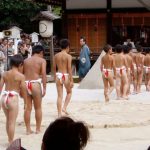
John Dougill writes, Priests hopping and cawing like crows. Seven year old kids doing sumo. What’s that all got to do with Shinto, you may wonder? Kamigamo Jinja is Kyoto’s greenest shrine and probably the oldest. It was established by the Kamo clan long before Kammu founded the capital in 794. One of the clan, according to legend, helped guide Emperor Jimmu across Kii … [Read more...] about Karasu Sumo at Kamigamo Shrine on September 9
John Dougill enjoys a seasonal stroll from Tambabashi to Fushimi
John Dougill writes... A pleasant walk through woods and 1100 years of history? In Kyoto? Yes, it’s possible on the south-eastern edge if you walk between Tambabashi and Fushimi-Momoyama. It takes two hours and along the way are imperial tombs, Shinto shrines and an Edo-era escapade. Start from any of three Tambabashi stations (JR, Keihan or Kintetsu). Walk uphill for … [Read more...] about John Dougill enjoys a seasonal stroll from Tambabashi to Fushimi
Kyoto Kanban: Unique Shop Signboards in the Old City
Ian Ropke writes, Japan’s ingenious and eye-catching signboards known as kanban are unique. The earliest examples avoided the use of words, presumably because they couldn't have been read by an illiterate public, and often focused on the shape of the product, or the form of the container in which it was sold. Larger than life carvings of objects such as geta, candles, … [Read more...] about Kyoto Kanban: Unique Shop Signboards in the Old City