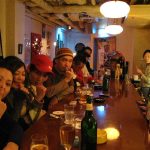
Here's a place I've been meaning to write up for the longest time. As regular readers may be aware, of a weekend my friends and I tend to gather at the wonderful music bar Joao.* However, Joao tends to close relatively early (around 11 pm), so if we still have a thirst upon us (and we invariably do) the bar of choice is Alphabet Ave. on Pontocho. Alphabet Ave. is a … [Read more...] about Alphabet Ave.
Takigi Noh (Noh by Firelight)
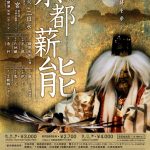
John Dougill writes… For many people Noh is a turn-off. The plays have no conflict, no humour and no facial expression. Actors move at a snail’s pace, the language is arcane and the music archaic. To its detractors it’s simply an outmoded relic of medieval times. Noh way, Noh thank you. There are regular performances in Kyoto, and if you attend you’ll find a good number … [Read more...] about Takigi Noh (Noh by Firelight)
Ikkyū
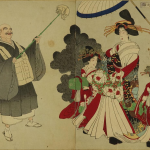
Ian Ropke writes... Ikkyū was a Zen monk who was famous for burning the candle of life at both ends. By day, he was devout and extremely accomplished monk and scholar. By night, he reveled in the so-called “floating world” of drink and women. He lived in tumultuous 15th century Japan at a time when most of the country was ruined by civil war. Ikkyū was born the … [Read more...] about Ikkyū
Geisha Dance: Kamogawa Odori

John Dougill writes... Charlie Chaplin loved it, and so have thousands of others. The Kamogawa Odori is simply irresistible and a rare chance to see geisha perform in public. It helps make May the merriest month of the year. Kyoto has five geisha areas in all, popularly known as 'hanamachi' or flower districts. Gion is the biggest and best-known; Pontocho which stages … [Read more...] about Geisha Dance: Kamogawa Odori
Introducing John Dougill

I am very happy to welcome a new regular contributor to Deep Kyoto: Mr. John Dougill. Born in Yorkshire, John Dougill first came to Japan in 1986 and to Kyoto in 1994. He has taught in several universities but is now happily employed at Kyoto’s Ryukoku University as professor of British Studies. His fascinating book Kyoto: A Cultural History makes his love for the city … [Read more...] about Introducing John Dougill
Thilaga Indian Restaurant
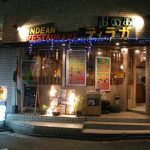
Mewby found this place one night on the net when she was really craving curry. The first thing that struck me was "They can't spell Indian." But somehow that only made me like them all the more. And besides spelling* is not important in an Indian restaurant. Curry is. Curry is everything. However, I'm not quite sure what to say about Thilaga's curry. The food is … [Read more...] about Thilaga Indian Restaurant
Japanese Noh Theatre
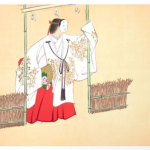
Performances for the Gods Ian Ropke writes... Japanese Noh theatre is one of the oldest dramatic forms in world. The early developments of Noh lie in the festive entertainment of various kinds (dance, simple plays) performed at temples and shrines in the 12th and 13th centuries. Noh drama for much of its history was favored by the samurai, priest and aristocratic … [Read more...] about Japanese Noh Theatre
Cherry Blossoms at Heian Jingu
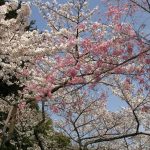
One of the best books you can read about Kyoto is a novel by Yasunari Kawabata: The Old Capital. It is both a great story, and a wonderful guide to the city and its seasonal traditions. One of the most famous scenes in that book is in the gardens of Heian Jingu when the characters Chieko and Shin'ichi go to see the cherry blossoms. I visited Heian Jingu yesterday to see these … [Read more...] about Cherry Blossoms at Heian Jingu
京町家の再生 – Machiya Revival in Kyoto
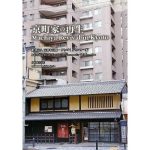
I've just finished reading this fine little book about the machiya (町家) of Kyoto. Machiya are the traditional narrow wooden townhouses of the old capital. Once, their tiled roofs and wooden lattice fronts typified Kyoto’s urban landscape. However, since the end of WW2 this traditional landscape has in large part been replaced by high rise buildings and parking lots. 13% of … [Read more...] about 京町家の再生 – Machiya Revival in Kyoto
Tengu
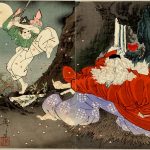
Ian Ropke writes: The mountains throughout Japan are home to a very long-nosed creature known as a tengu or mountain goblin. The origins of tengu are not very clear. They can be found in both Shinto and Buddhist texts. Some scholars trace the origin of the tengu to one of the primary gods of Shinto: Susano-o, who shares many of the characteristics for which tengu are feared … [Read more...] about Tengu
Apollo Plus
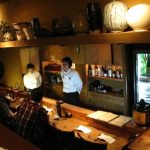
Apollo has become one of our favorite places to eat over the last year or so. It's an izakaya-style restaurant, but the food is just a little bit nicer and the atmosphere just a little bit quieter and calmer than some of the bigger chain izakayas around the Kiyamachi/Kawaramachi area (where you might have to scream to make yourself heard). Even so the prices are pretty … [Read more...] about Apollo Plus